
On this page:
'AusNet has installed 10 low-voltage (LV) pole-mounted batteries across its distribution network. This will deliver an innovative alternative to traditional network augmentation while providing benefits for both customers and the electricity network.'
Shuyi Li, Lead Engineer in AusNet’s Grid Evolution team explains the opportunities and challenges of the project.
- Batteries installed on local streets means improved power quality.
- Batteries can change how consumers generate solar, store and use energy.
- This project helps establish a safe and reliable pathway for future battery installations on Ausnet’s network.
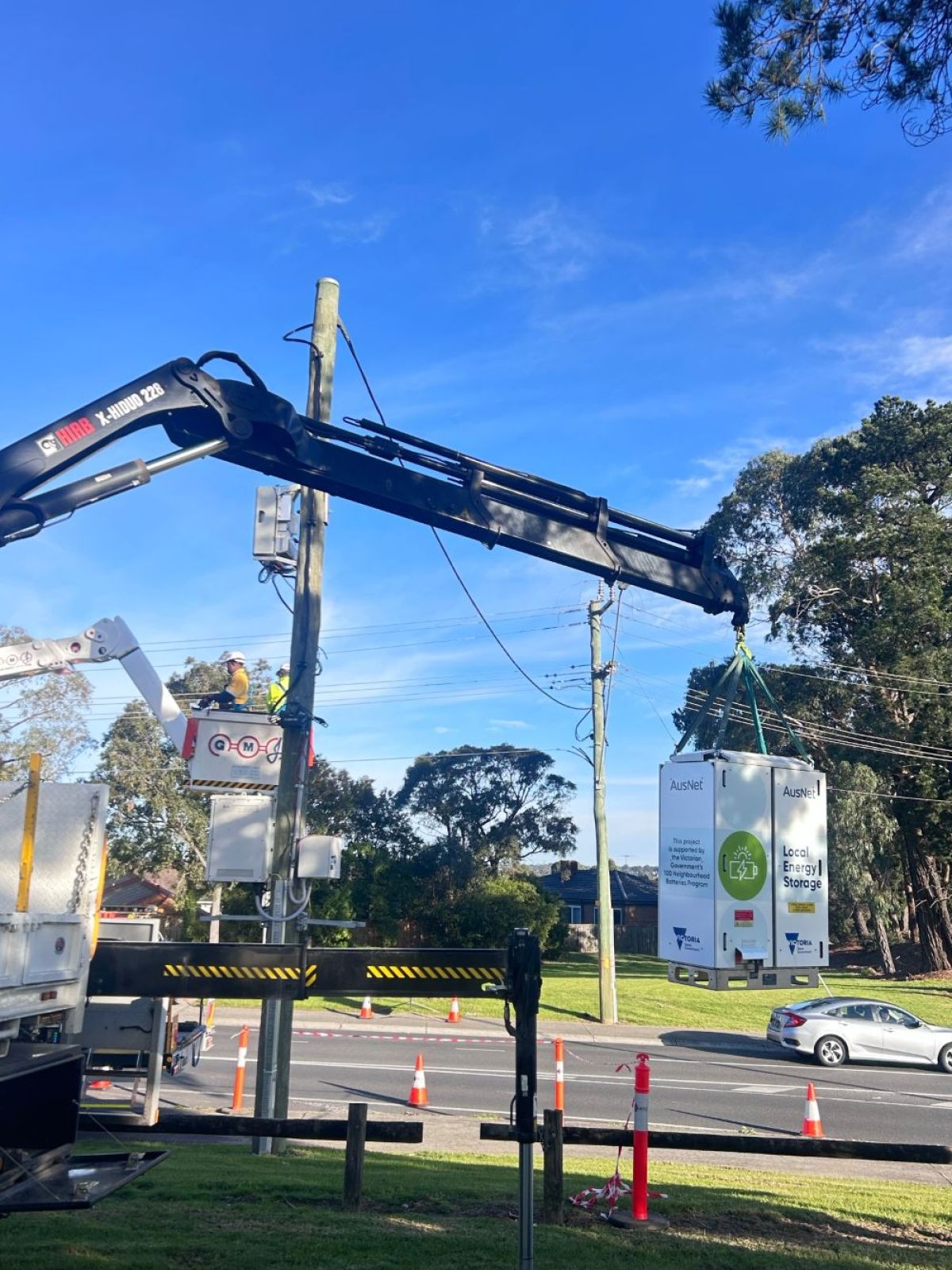
Managing the challenges of the 'duck curve'
The main purpose of the batteries is to help manage the growing challenges associated with the 'duck curve' and increasing levels of rooftop solar generation.
'We install batteries where we see high midday solar export and strong evening demand. The batteries charge during the day when exports are high, store the energy for a few hours, and then discharge in the late afternoon and early evening.'
Shuyi Li
The batteries help balance two-way power flows on the network by:
- absorbing excess solar generation during periods of low demand
- supplying energy back to the network when demand increases.
Key benefits for customers
1. Improved voltage stability during high solar exports
High levels of solar exports across communities can:
- raise local voltage levels
- cause inverters to trip
- prevent customers from generating or exporting electricity.
Batteries installed on local streets can absorb excess solar energy during these periods. This can help maintain stable voltage levels so customers can maximise the value of their solar investment.
As distributed battery storage is deployed at scale, it can deliver broader customer benefits. This includes:
- alleviating customer export limits
- enabling more customers to install solar PV and export their excess solar generation.
2. Better power quality during periods of peak demand
The batteries also support voltage levels for those times when power is in high demand. When many customers are using electricity at the same time, local voltage levels can drop. This may affect the performance of household appliances and equipment.
Customers may experience issues such as:
- lights dimming or flickering
- air conditioners and heat pumps operating less efficiently
- microwaves taking longer to heat food.
By supplying stored energy when it is needed most, batteries help support local voltage levels, improve power quality. They also provide customers with a more reliable and consistent electricity supply.
3. Deferral of network upgrades
By addressing local network constraints, batteries can defer or avoid the need for more expensive infrastructure upgrades. This helps keep network costs lower over the long term and supports more affordable energy services for consumers.
'Instead of upgrading transformers and conductors, which can involve extensive construction works, a battery can often be installed on a power pole and connected directly to the existing network.
When deployed in the right locations, batteries can provide a more efficient and cost-effective solution, delivering benefits to customers sooner and at a lower overall cost.'
Shuyi Li
Technical challenges and safety considerations
While batteries offer significant operational benefits, deploying this new technology also introduced a range of technical, safety and operational challenges.
Cybersecurity and digital safety
Cybersecurity was a major focus for this project. As Shuyi observes, '50% of the project is a digital project.'
This is because the batteries rely on:
- advanced software
- remote communications
- control systems to operate effectively.
'We not only have to treat it as an electrical device but also a communications device,' Shuyi says.
This required AusNet to develop thorough cybersecurity measures alongside its traditional engineering and operational controls.
Government funding made the project possible
As one of Australia’s first distribution-connected battery project, Shuyi acknowledges that the project would not have proceeded without support from the Victorian Government through the 100 Neighbourhood Batteries program.
This is because AusNet had to invest heavily in the establishing the following for distribution-connected batteries:
- safety systems
- remote operating capability
- risk management frameworks.
As a first-of-its-kind project in the AusNet network, many of these costs could not be justified by the network benefits of the initial deployment alone, meaning the Government funding was pivotal to the project proceeding.
The funding was about more than supporting a single battery deployment. It enabled the foundational development work needed to make future battery projects viable at scale. This included:
- testing
- engineering standards
- operational procedures
- asset management frameworks.
Government support was critical in establishing a safe and reliable pathway for future battery installations. It also helped Ausnet generate valuable learnings that will help reduce costs and accelerate future deployments.
A solution for the future
As network load and export constraints become increasingly common and extreme, AusNet sees batteries as an important tool for future network management.
Traditionally, distribution businesses addressed these challenges through transformer upgrades or by manually adjusting voltage regulators. While effective, these approaches can be costly, time-consuming and labour intensive.
Batteries, by contrast, offer a flexible alternative. They address both export and load constraints while supporting network performance and customer outcomes. Batteries do this by charging when solar exports are high and discharging when demand increases.
Installed within local communities, as Li explains, 'Batteries have the potential to change how our consumers generate solar, store and use energy. For businesses and networks, they also play an important role in managing network constraints.'
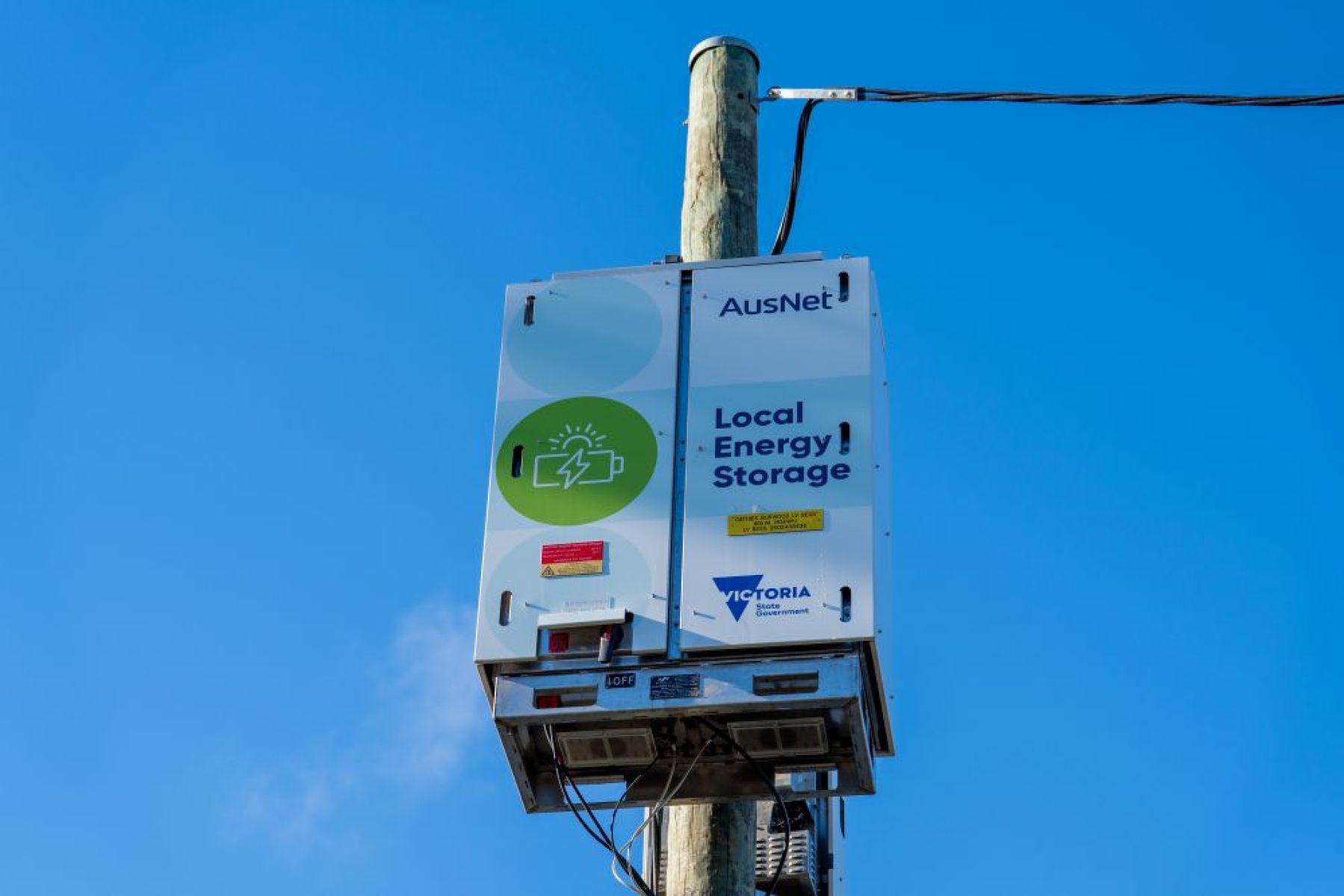
Battery locations
The 10 pole-top batteries have been installed at:
- Coldstream
- Diamond Creek
- Ferntree Gully
- Heathmont
- Knoxfield
- Lysterfield
- Smiths Beach
- Traralgon
- Wantirna
- Wantirna South.
Page last updated: 28/09/26