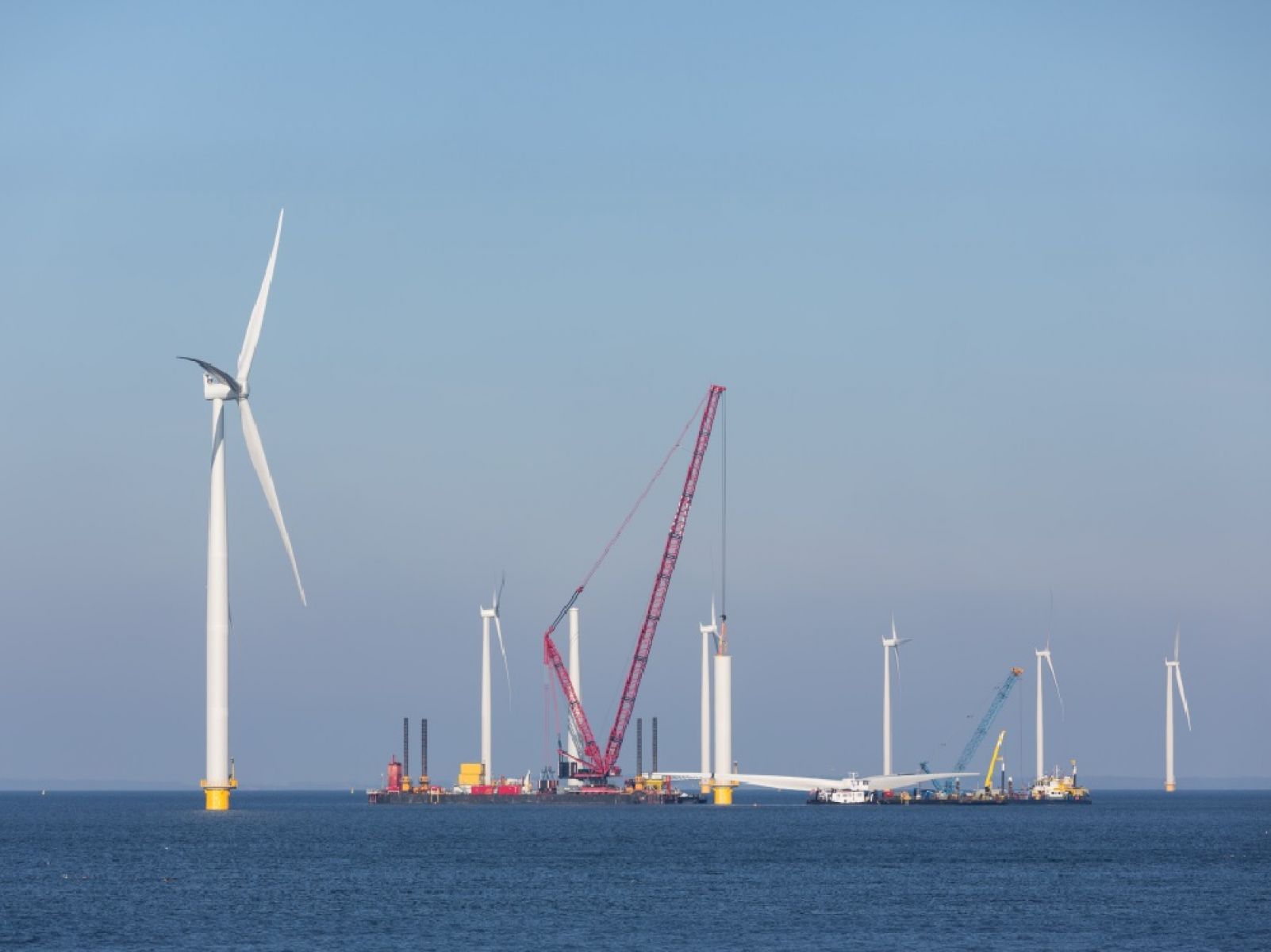
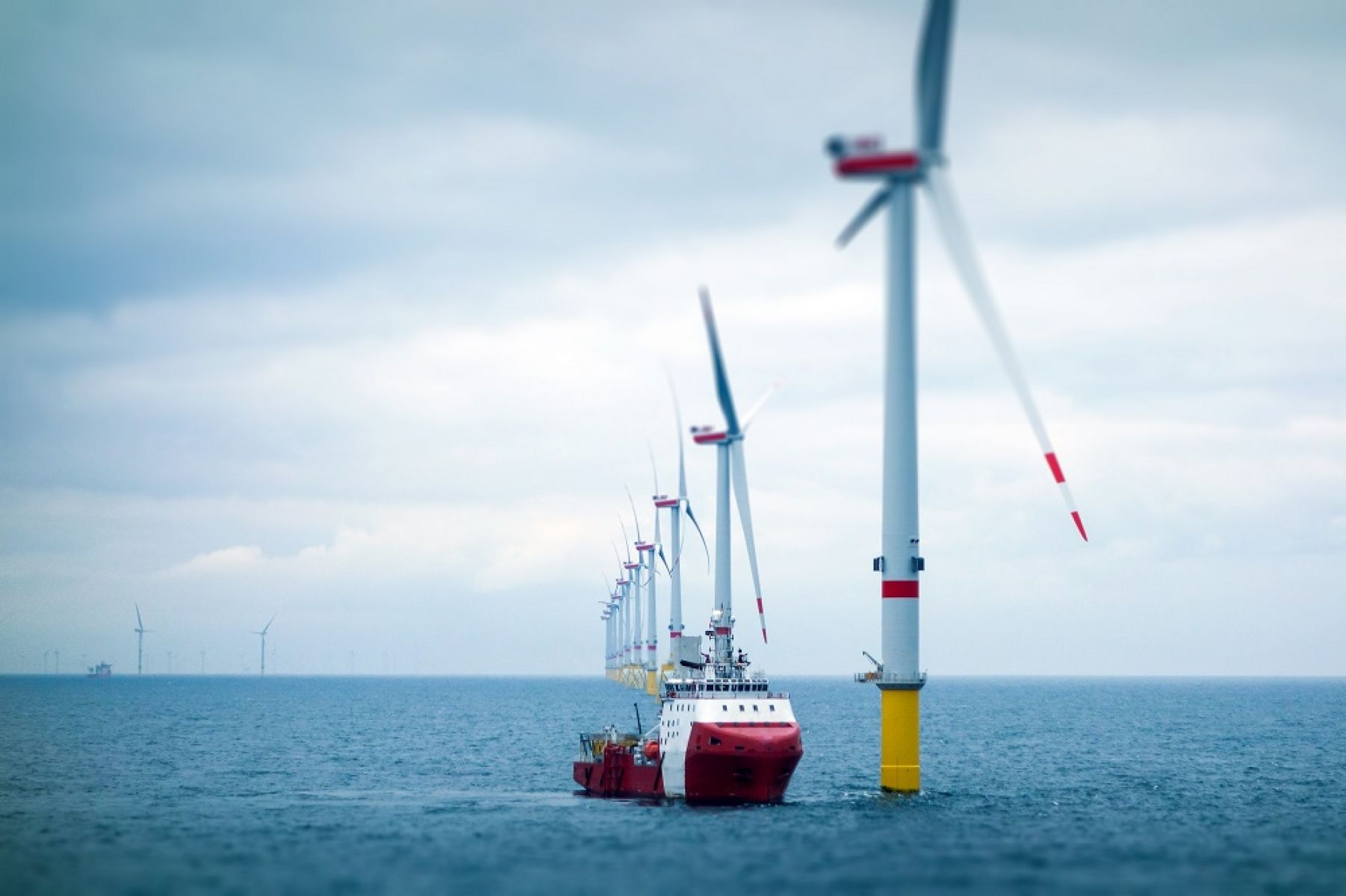
Victoria is building a thriving offshore wind sector, leading the way for Australia’s first offshore wind energy projects.
On this page:
Why offshore wind?
The waters off Victoria’s coastline have some of the strongest and most consistent winds in the world, accompanied by relatively shallow ocean depths. This makes Victoria ideal for offshore wind energy.
The first 2 gigawatts of electricity generated by offshore wind could power 1.5 million homes. The Victorian Government has a legislated offshore wind energy generation target of 9 GW by 2040.
Our new offshore wind industry will:
create new jobs and career pathways
boost Victoria's manufacturing and supply chain development
increase regional investment
support our climate action goal of net-zero emissions by 2045.
To help grow and support this important industry, Offshore Wind Energy Victoria (OWEV) was established as a division of the Department of Energy, Environment and Climate Action (DEECA). OWEV is Victoria’s offshore wind gateway for industry, stakeholder and community engagement.
Steps to establishing an offshore wind farm
Developing an offshore wind project requires extensive planning, environmental assessments, supply chain development and regulatory approvals. Because of their scale and complexity, the development timeline for an offshore wind project is lengthy.
While all offshore wind farms will be built in Commonwealth waters, both Australian and Victorian government regulatory approvals are needed to develop an offshore wind project in Victoria.
Before an area is officially declared, the Australian Government carries out assessments of an area’s wind speeds, ocean depths and access to an existing onshore electricity grid.
It also consults Australian and Victorian Government agencies, Traditional Owners, industry stakeholders and the community. Consultations on the proposed declared area in the Bass Strait were held from 5 August to 7 October 2022. Explore the outcomes of the Bass Strait public consultation.
Once an area is declared suitable for offshore wind, the Australian Government invites applications for feasibility licences. This is the first licence needed in the offshore wind development process.
2. The licence process
A series of licences is required for the different stages of developing an offshore wind farm.
After an area is declared suitable for offshore wind, developers can apply for a feasibility licence to explore a proposed project within the declared area. These are issued by the Australian Government for a period of up to 7 years.
As part of this process, developers must submit a feasibility licence management plan. This shows how the above activities will be carried out, including:
how they will share the area with other users
a plan for gathering and responding to ongoing feedback from stakeholders throughout the life of the project
demonstrating that all activities comply with the Environmental Protection and Biodiversity Conservation Act (EPBC) 1999 approvals
a clear plan for showing how they will construct, install, commission, operate, maintain and decommission any infrastructure needed to assess feasibility of the proposed project.
Undersea transmission cables will transmit the electricity generated from offshore wind farm to the onshore grid. A transmission infrastructure licence allows developers to plan, design, build, operate, maintain and decommission such transmission cables from their licensed area to the Victorian maritime boundary (3 nautical miles from the shoreline).
An approved management plan must also be in place, and all activities must be conducted in accordance with that plan and the licence. Transmission infrastructure licences are issued by the Australian Government.
Offshore wind transmission cables will also cross into Victorian state waters and connect to shore. A Victorian feasibility access licence allows developers to carry out investigations on Victorian public land. These investigations are necessary to determine the most appropriate location for required connection infrastructure.
A commercial licence allows a developer to build, maintain, operate and decommission a wind farm. Developers will only be granted a commercial licence if they have met all the requirements of their feasibility licence. They may also be required to conduct specific kinds of consultation before the licence is issued. A commercial licence lasts 40 years, also requires a management plan and is issued by the Australian Government.
A developer must first prepare a management plan that covers the entire proposed commercial project, including on the consultation that has taken place with existing marine users, First Nations groups and relevant government departments. Before any works can commence the Australian Offshore Infrastructure Regulator must approve the plan.
3. Assessments and approvals
All offshore wind farm proposals must undergo a range of assessments and approvals processes under Australian and Victorian Government regulations.
Early offshore wind projects require financial support to provide investment certainty. This support is being delivered via a competitive auction process for Victoria’s first 2 gigawatts (2GW) of offshore wind for projects off the Gippsland coast.
Proposals will be assessed on value for money and deliverability, as well as commitments to local content, workforce development, partnerships with Traditional Owners, community engagement and benefit sharing.
Offshore wind contracts are expected to be integrated into the new national Electricity Services Entry Mechanism (ESEM), designed to support new energy generation across the National Electricity Market (NEM). The ESEM will provide an enduring pathway for delivery of 9 GW of offshore wind in line with Victoria’s long-term targets.
The Victorian Government opened Australia’s first offshore wind auction in August 2026. The auction timeline includes a 12-month request for proposal (RFP) phase from August 2026 to August 2027. After auction close, an extensive evaluation of these bids will occur to select successful projects, with contracts for the first 2 gigawatts expected to be awarded in 2028.
Local businesses, communities and Traditional Owners can expect offshore wind developers to enter a new phase of direct and specific engagement as they develop and finalise their bid commitments.
Before an offshore wind energy project can proceed, it must meet the requirements of the Australian Government’s Offshore Energy Infrastructure Act (OEI Act) and all relevant Australian and Victorian environmental requirements.
Licences issued under the OEI Act are separate to approvals under the EPBC Act and any state and territory requirements and approvals under one Act does not guarantee approval under another.
Enabling infrastructure
To deliver offshore wind energy to Victorian homes we also need to make sure we have the right supporting infrastructure in place.
We need a port to construct and assemble the large and heavy turbines and other ports to support operations and maintenance. We also need transmission infrastructure such as onshore transmission lines and substations.
Ports
The Victorian Government has chosen the Port of Hastings as the main location for the construction and assembly of offshore wind infrastructure.
The proposed Victorian Renewable Energy Terminal (VRET) will be a dedicated facility to receive, assemble, and deliver offshore wind components to offshore wind farms off the Victorian coastline.
Additional ports will be important for operations and maintenance. Ports such as Barry Beach Marine Terminal and Port Anthony, for example, could be suitable because they are close to the Gippsland offshore wind area.
VicGrid is responsible for coordinating how offshore wind farms connect to the electricity grid. This includes building the shared transmission line to connect 2 gigawatts (GW) of offshore wind energy to the grid. The line will use 500 kilovolt (kV) double circuit overhead transmission technology, starting near Giffard and connecting to the Loy Yang Power Station switchyard.
We understand that Victorians have a keen interest in how offshore wind projects and supporting transmission infrastructure will be developed. We will continue to undertake planned, respectful and ongoing engagement with communities as we establish this new renewable energy resource.