On this page:

Energy with all the benefits: the Hurstbridge battery and solar project

A 240‑kilowatt-hour battery with a 38‑kilowatt solar PV system has been installed in Hurstbridge providing:

  • up to 48-hours community resilience in an outage
  • $12,000 a year in savings on energy bills
  • emissions reductions.
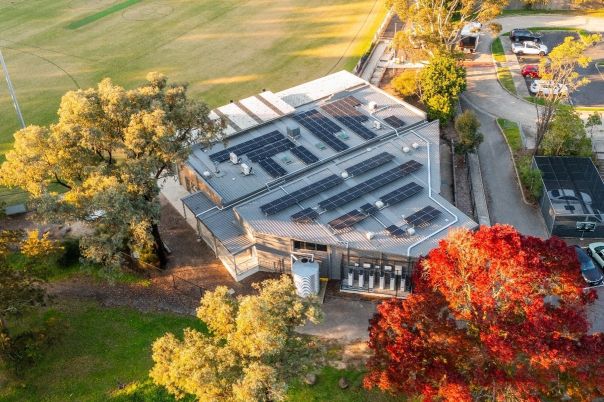
Drone picture of the Hurstbridge football pavilion showing its solar array and battery.

The installation of a battery paired with solar in Hurstbridge is delivering energy resilience and a range of valuable benefits for the community.

The Hurstbridge community and surrounding areas are set to gain from a recently installed 240‑kilowatt-hour battery alongside a 38‑kilowatt solar PV system, that can also be connected to a backup generator. Together, these technologies will not only power and provide resilience to the local community but bring substantial additional benefits.

Funded by the Victorian Government’s 100 Neighbourhood Batteries Program, the system’s primary purpose is to power the Hurstbridge Football and Cricket pavilion during a power outage.

As Melinda Miles from Nillumbik Shire Council, who was one of the key drivers of the project explained, the system has 'been designed around community energy resilience… [it’s] designed to run the pavilion for at least 48 hours in a power outage.'

Having somewhere to go during prolonged outages is an important capability for the area, particularly for neighbouring communities in more rural areas susceptible to longer outages.

For any future outages, residents from nearby townships—including Kangaroo Ground, Panton Hill, and Wattle Glen—will now be able to access showers, refrigeration, device charging, and a safe communal space.

Lowering costs for the clubs

The system also delivers benefits for the clubs that use the pavilion. It’s especially valuable for the football club, which uses a significant amount of electricity for lighting.

The clubs can now call on power produced from solar during the day and stored in the battery for training that happens after dark. According to Ms Miles, 'it’s predicted that the football, cricket, and netball clubs will save around $12,000 a year in avoided energy costs.'

By reducing their operating costs, this solar and battery system frees up money that the club can invest back into community sporting programs.

Delivering emissions reductions

The project also contributes to emissions reduction goals. Nillumbik Shire Council’s Climate Action Plan includes a target of net zero emissions for community by 2035, and this initiative provides a tangible step toward that goal.

'This was a really practical way to move closer to net zero emissions,' Ms Miles said.

Sustainability leadership in action

Ian Culbard, also from Nillumbik Shire Council, highlighted that the new system enhances the sustainability and community credentials of not just council but the clubs too. 'It’s good for their profile,' he said, noting that installing the system demonstrates real community leadership.

Education is key

Another key benefit has been the education opportunities the system has afforded.

Comprising mostly of families, the clubs have big memberships, but engaging with this cohort has been difficult, especially on matters of being more energy efficient.

As Mr Culbard said, 'to be involved at a facility that is promoting this, that's demonstrating it, they can see the tangible benefits. We really hope that as an education piece, people would take the message home with them, and they might now think, oh, maybe the time is right to get a battery too.'

Batteries: technology for the current era

While other technologies could have been chosen for this project, Ms Miles said there was only really one choice for meeting the project’s objectives of reducing emissions, driving down costs and employing an energy resilience technology that’s reliable. 'Batteries are a technology for the current era,' she said.

Watch a short video about the project.

Yarra Council’s Community Charge project: bringing a spark to the neighborhood

Yarra's Community Charge project - YouTube

Yarra Council’s Community Charge project is an initiative demonstrating how buildings across Yarra can be used to quickly increase the amount of clean, renewable energy being locally generated and used by our community.

This is a co-funded through the Victorian Government’s 100 Neighbourhood Batteries Program.

Yarra Council deployed 162 kW of solar panels and 360 kWh of batteries across four community buildings, including:

  • Alphington Park Pavilion
  • Fairlea Reserve Netball Complex
  • Fairfield Park Pavilion
  • Mark Street Hall.

The electricity captured and stored from these buildings will be used:

  • to light local sporting fields
  • for space heating/cooling
  • to export renewable energy into the local electricity system during times when demand for electricity is high
  • to generate revenue from selling electricity into the local electricity system when prices are favourable. Savings will be distributed annually to local community groups through Yarra Community Grants.

Community charge | News, Yarra City Council

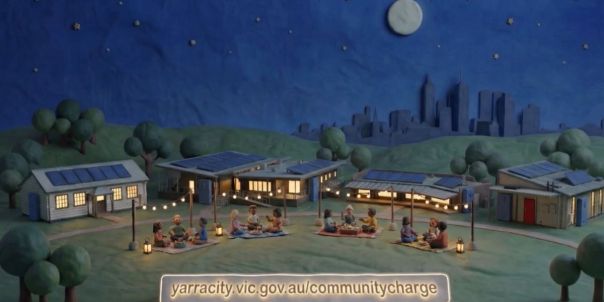
Still from the Yarra community charge video showing lit up buildings

Yackandandah: the small community making big strides in renewable energy

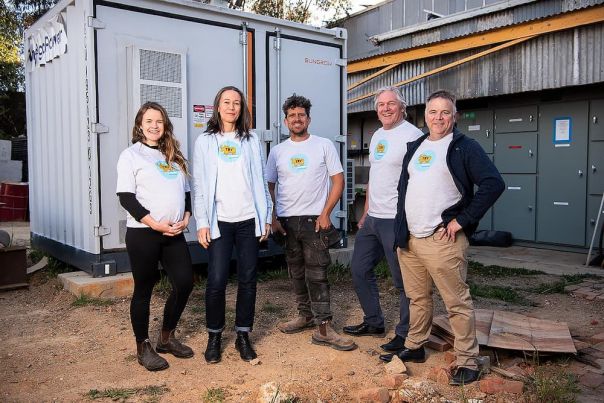
Picutre of members of the Totally Renewable Yackandandah standing in front of the Yackandandah battery.
Members from Totally Renewable Yackandandah standing in front of the the inverters and switchboards for their 274 kWh neighbourhood-scale battery and its 65 kW of solar panels. Photo credits are to Totally Renewable Yackandandah.

With the support of the 100 Neighbourhood Batteries Program, the Yackandandah community is leading the way in batteries and energy.

Yackandandah, situated 3 hours 23 minutes from Melbourne, with a population of 2,008 and a reputation for being one of Australia’s prettiest villages, will soon be able to lay claim to being a model for innovative energy storage technologies.

According to Matt Charles-Jones and Dr. Juliette Milbank from Totally Renewable Yackandandah (TRY), 'we are very firmly fixed on 100% renewable energy and have made some great gains.'

This is where the 100 Neighbourhood Batteries Program and its battery grants have been crucial. Next April 2025, TRY will install a 60kW/200kWh neighbourhood-scale battery, which the town is very excited about. 'Having more storage is a big factor in trying to level out daytime generation and nighttime demand,' Milbank said.

Located at the Yackandandah Sports Park, the battery will not only support the local sporting clubs and on-site recreation activities, but it will also provide valuable facilities during power outages.

'The battery provides multiple benefits: reducing carbon pollution, cutting energy costs, and enhancing resilience. For us, the battery has benefits on those 3 things.'

Dr Milbank

This success hasn’t been achieved without significant community dedication. 'This is just another manifestation of the spirit of the community. And it’s a very significant piece in the puzzle, Charles-Jones said.

Yet, the renewable energy vision for Yackandandah extends well beyond these immediate gains. The community aims to create a scenario where 'energy is not something done to us, but something done by us'.

And once the battery is operating, they’ll shift their focus to what lies ahead. 'We need to understand how batteries at all scales work in the energy system,' they said, highlighting the importance of adaptability in an evolving technological landscape.

Across Victoria towns are seeking to increase their generation and use of local renewable energy, and batteries are a key enabler of this.

'The rate of change in battery technology is so rapid that we need to know how to use them, so as the technology develops, we are ready to apply the learnings for great consumer and environmental outcomes.'

Charles-Jones

At the heart of Yackandandah's renewable energy strategy is a commitment to effectively managing fluctuating renewable energy sources. 'It’s about managing an energy source that is intermittent so we can save power when it’s plentiful and use it when it’s not,' they said.

Yackandandah’s efforts show how small communities can drive significant progress in renewable energy. With their pioneering approach and community spirit, Yackandandah is not just imagining a sustainable future, they're building it.

Monbulk RSL energy resilience and community hub video case study

Monbulk, Victoria was hard hit by the 2021 storms with power out for weeks. The Monbulk RSL became a vital community hub supporting hundreds of residents.

The Victorian Government’s Energy Resilience Solutions program installed a back-up energy system of neighbourhood battery, solar PV and generator at the Monbulk RSL to support during future prolonged power outages.

Hear the communities experience with bushfires, storms and prolonged power outages plus how the RSL and community-run Monbulk Emergency Management Group are prepared for the next event.

This Community Made Themselves Disaster-Proof - YouTube

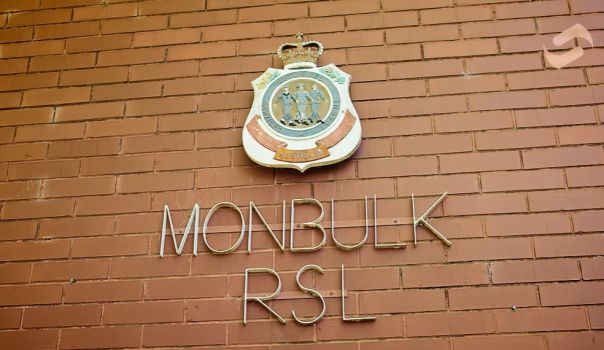
Facade of the Monbulk RSL

Round 1 projects

Project facts

Lead organisation: Totally Renewable Yackandandah

Project partners: Indigo Power, Australian Ethical Sports Park Committee, Yack Community Centre,

Start date: July 2024

Expected completion: April 2025

Battery location: Yackandandah Sports Park, Indigo Shire Council

Battery sizing: 60kW/200kWh

Chemistry and configuration: Lithium iron phosphate, behind-the-meter battery

'This [Yack02 project] is just another manifestation of the spirit of the community. And it’s a very significant piece in the energy puzzle.'

Dr Juliette Milbank – Vice President, TRY

Organisation description

Totally Renewable Yackandandah (TRY) is an award-winning, community-focused volunteer organisation based in the regional Victorian town of Yackandandah, who are pushing the boundaries of sustainably sourced, local energy supply.

Project description

TRY will work closely with community-owned energy company Indigo Power and Indigo Shire Council to install an islandable 60kW/200kWh battery at the Yackandandah Sports Park. The battery will support the local sporting clubs and recreation activities that occur on site, save on operating costs, and can provide back-up energy in times of a power outage.

Why a battery is needed

The battery will increase the breadth of Yackandandah’s renewable energy projects in the shift to clean, local power. It will expand the number of batteries in the local network and will also activate a complimentary, and separately funded, activity of installing 60kW of solar panels at the Sports Park. The new battery, combined with the extra solar generation and an islanding capability, will also allow the facility to continue operating in the event of a power outage, providing energy resilience in times of emergency.

Benefits

  • Reduced power bills for the Sports Park, so funds can be reallocated to other much-needed improvements around the site.
  • Decreased carbon emissions from the Sports Park operations by reducing its reliance on coal-powered energy.
  • Supporting the drive by Yackandandah to 100% renewable energy.
  • Provided a site of electricity services during prolonged power outages and in the aftermath of a fire, storm or flood.

Project facts

Lead organisation: Indigo Power (IP)

Project partners: Northeast Water

Name of the project: Wodonga Neighbourhood Battery

Start date: June 2024

Expected completion date: August 2025

Number of batteries: 1

Battery locations: Baranduda

Battery sizing: 50kW/200kWh

Chemistry and configuration: Lithium Iron Phosphate, behind the meter.

'Indigo Power is a certified social enterprise, owned by the community as a part of a shareholder offering, so our business needs to closely align to the values of our customers. One of those values is to deliver 100% renewable energy, which this battery will help us to do.'

Heath Shakespeare, Project Manager, Indigo Power

Organisation description

IP is a community owned renewable energy company driving the transition to clean energy across northeast Victoria and southern New South Wales. IP’s purpose is to create a society powered by 100% renewable energy in a way that supports and empowers communities.

Project description

IP will install a neighbourhood battery with a capacity of 50kW/200kWh. It will be connected to the electricity grid ‘behind the meter’ through an existing high-capacity connection point. IP will operate on a solar soak model using solar generated electricity supplied by Indigo Power’s customers during the day and exporting the energy when there is demand for it during the evening peak.

IP will use the battery to reduce wholesale costs and pass all savings on to retail customers via increased Feed in Tariff (FiT) and/or decreased retail tariffs.

Why a battery is needed

The battery will develop and test an innovative commercial community battery model, contributing to the emerging knowledge base of operational models and revenue generation for neighbourhood scale batteries.

Benefits

  • Reduce electricity costs for all IP customers, including low-income households, renters, and apartments through an increased FiT and/or decreased retail tariffs.
  • Assessment of the ability of neighbourhood-scale battery storage to contribute to the electrification and decarbonisation of Northeast Water’s operations, providing a proof of concept for other water utility operations.
  • Improved network reliability.
  • Reduction of local solar export limitations.


Project Facts

Lead organisation: GV Community Energy

Name of the project: Resilient Community Organisations

Partner organisations:

  • Merriwa Industries
  • Moyola Aged Care

Start date: July 2024

Expected completion date: March 2025

Number of batteries: 2

Battery locations:

  • Moyola Aged Care, Greater City of Shepparton
  • Merriwa Industries, Rural City of Wangaratta

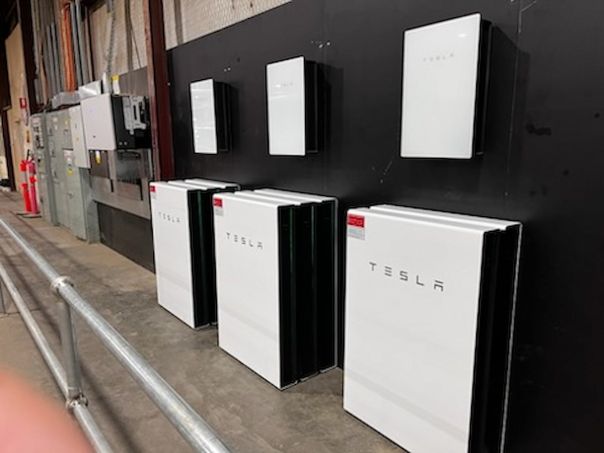
Battery sizing: 8 Tesla 2 Powerwalls connected in series at each site.

Chemistry and configuration: Lithium-ion, behind-the-meter, islandable.

Organisation description

GV Community Energy(GVCE) is a social enterprise not for profit community owned company, committed to reducing the carbon footprint of north and north-east Victoria since 2008. GVCE has coordinated the installation of over 3,800 domestic solar PV systems and 50 commercial systems, 150 solar hot water systems, 2,700 energy assessments, 1,000 home energy efficient retrofits and 194 community seminars/workshops.

Merriwa is an organisation operating as a social enterprise since the mid-1990s. One of Merriwa’s core values is diversity, something it lives and breathes on a daily basis through its people and business operations and employs an all-abilities team of over 300.

Moyola Aged Care offers caring and compassionate residential aged-care and respite-care services with 43 beds, and 36 independent living units at its Moyola Gardens facility for the people of Tatura and the wider community.

Project description

The project will deliver 2 behind the meter islandable neighbourhood batteries, supplied and installed by Future NRG, at 2 not-for-profit community sites across Victoria: Moyola Aged Care and Merriwa Industries.

These batteries will reduce energy operating costs by storing excess solar electricity generated on site, for use later in the day to displace electricity sourced from the grid.

They will allow Moyola Aged Care and Merriwa Industries to re-invest these financial savings into site upgrades for workers with disabilities and aged care residents. Merriwa Industries will use these savings to provide site upgrades to workers with accessibility needs as well as bus transport for workers in the Alpine region.

Moyola Aged Care will reinvest these savings into a sensory garden for the benefit of its dementia patient residents.

Why a battery is needed

The batteries will be in the Shepparton and Wangaratta areas that experience frequent energy outages. They will provide onsite energy reliability to Merriwa and Moyola and assist in stabilising electricity services to the surrounding network to assisting in minimising local outages and reliability issues.

Battery backup power will allow Moyola Aged Care to continue to provide care to its residents as usual and allow Merriwa Industries to continue operating in the event of power outages.

Additionally, the sites need the batteries for operational planning to allow each organisation to increase the level of care and quality of life to their respective workers and residents.

Benefits

The battery will provide:

  • energy cost savings to the sites
  • increased energy resilience at both sites allowing them to operate during outages for certain periods
  • funds for a dementia-friendly sensory garden at the Moyola Aged Care.
  • funds for site accessibility upgrades for workers at the social enterprise Merriwa Industries
  • funds for a specialised bus for transport for Merriwa Industries employees in the Alpine region.

Page last updated: 24/08/26