
The Women in Energy Strategy calls on government, industry, and education and training providers to work together to ensure women’s full and equitable participation in training and employment opportunities in Victoria’s growing renewable energy sector.
The Strategy is designed to support the full and equitable participation of women in the jobs and training opportunities emerging from Victoria’s renewable energy transition.
Why do we need a Women in Energy Strategy?
The Strategy focuses on delivering outcome-oriented actions to address barriers and promote inclusion to solve the following problems:
- the need for more skilled workers to support Victoria’s renewable energy transition
- women not sharing equitably in the opportunities in the energy sector
- the energy sector missing out on the benefits of a diverse workforce.
Resolving these challenges is complex and includes structural and cultural barriers that can deter or prevent women from pursuing a career in the energy sector.
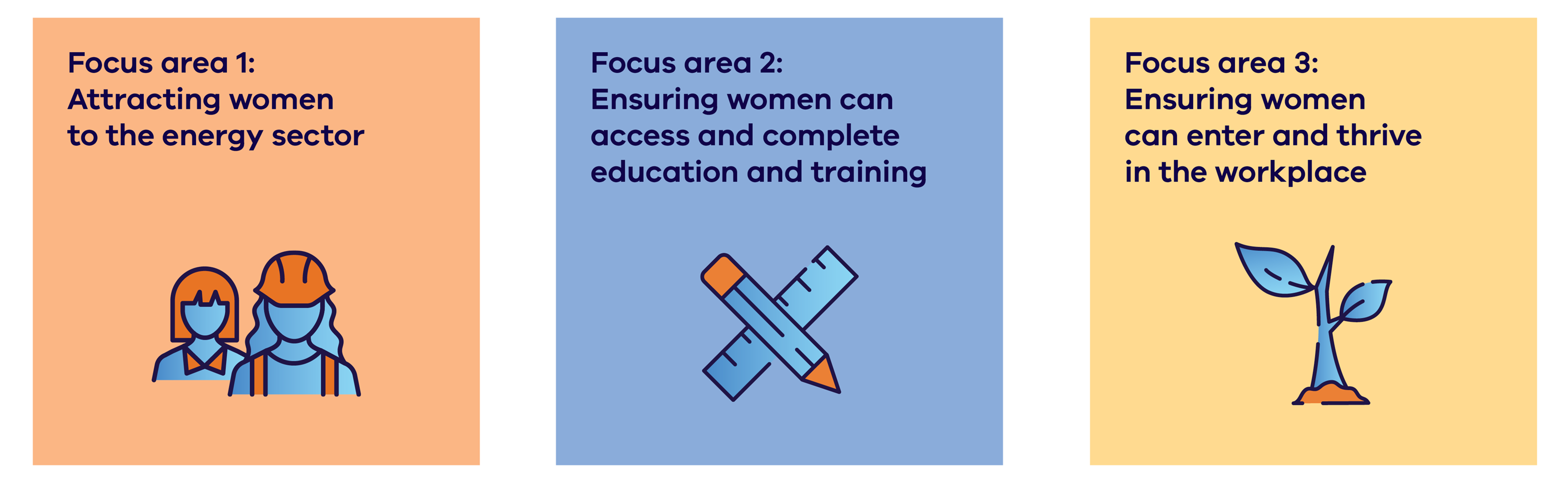
This Strategy focuses on addressing bias in career choice, making improvements to women’s participation levels as the sector transitions, and tackling fundamental barriers in the workplace, through three focus areas.
Alignment with the Victorian Energy Jobs Plan
The Women in Energy Strategy is closely aligned to the Victorian Energy Jobs Plan to help ensure women can share equitably in the opportunities as the sector and its workforce develops.
The two initiatives are complementary and were developed in parallel, with all actions in the Women in Energy Strategy contained in the Victorian Energy Jobs Plan. This integration ensures gender considerations are embedded across the Plan’s initiatives, enabling consistent and coordinated implementation and monitoring.
Page last updated: 06/07/26