
On this page:
The importance of electrical isolation
When installing insulation, it’s vital to have a plan in place for safely isolating electrical circuits. This is especially important to ensure worker safety when inside the roof cavity due to the common presence of electrical wiring and connections to downlights, fans and other electrical appliances.
Additionally, solar and battery systems are now common on a lot of houses.
Electrocution is one of the leading causes of death for construction workers, including electricians. Each year, WorkSafe is notified of hundreds of electric shock incidents, many of which occur during construction work.
During the Home Insulation Program (2009–2010), 3 workers died of electrocution in separate incidents. In 2 cases, metal staples penetrated reflective foil insulation and contacted electrical wiring, and in another incident a steel pole contacted a live conductor. Proper isolation of the electrical system would have prevented these fatalities.
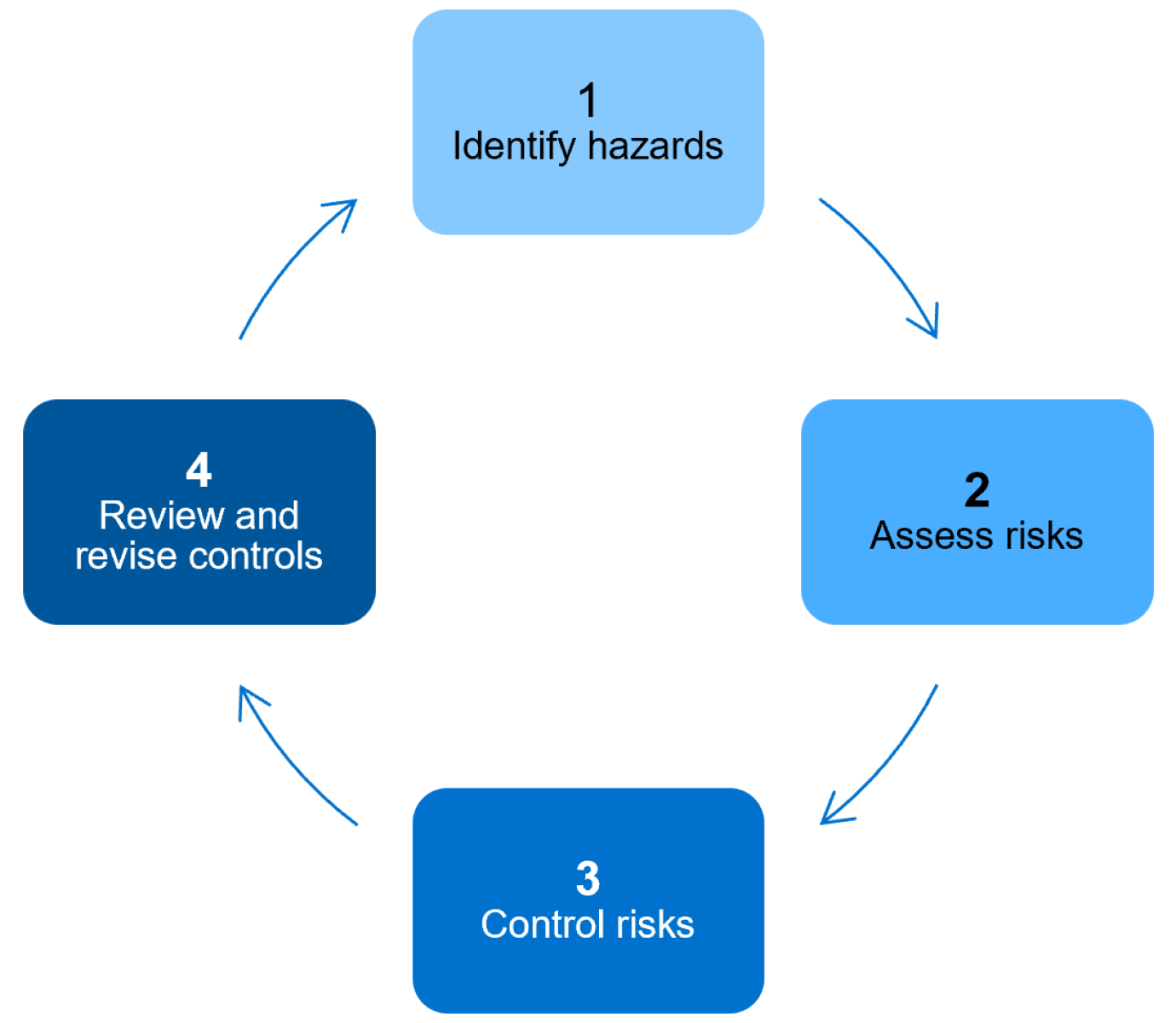
Follow this 4-step risk management process to ensure hazards are identified, risks are assessed and controlled, and that employers fulfil their duty to monitor, review and revise controls when required:
Figure 1: The 4-step risk management process
Step 1: Identify hazards
One of the key hazards when working in ceiling spaces is the risk of electric shock or electrocution.
Electric shock is the passage of electricity through the human body.
Electrocution is the passage of electricity through the human body which results in death.
Electrical wiring is commonly present in these areas and may be concealed beneath old insulation, run across joists and can be damaged or exposed.
It is essential to ensure that electrical systems are isolated before work begins to ensure the risk of contact to live components is reduced.
Electric shock or electrocution occurs when an electrical current passes through the human body, which can conduct electricity. Depending on the severity and duration of exposure, contact with electricity can cause:
- burns to the skin and internal tissues
- disruption to the heart’s electrical activity, which may cause the heart to stop or beat irregularly.
- Secondary risks, like falling from height.
Even in cases of seemingly minor exposure, medical attention should be sought to assess potential impacts on cardiac function.
Step 2: Assess risks – electrocution in ceiling spaces
When working in ceiling spaces, there are several factors that increase the likelihood of an electrical hazard. This includes:
- Vermin: Vermin such as mice, rats or possums can damage electrical wiring by chewing insulation. This can expose live conductors.
- Worn electrical wiring insulation: Electrical wiring insulation can become brittle when it has deteriorated or been exposed to excessive heat. In addition, brittle insulation can break into pieces when disturbed. This can expose the live conductors.
- Damage to the earth conductor or bonding: Hazards can develop from damage to the main earth conductor or earth electrode, or main neutral faults. This may cause current to flow in the earth conductors, or metallic parts such as metal pipes, exposing someone to a risk of electric shock or electrocution.
- Previous electrical work: Non-compliant electrical work completed previously may increase the risk of electrocution, particularly where damaged cabling is installed through steel elements, creating the potential for steel components to become energised.
Reminder: if construction work relating to a ceiling space involves working on or near electrical installations or services, a safe work method statement (SWMS) must be prepared before work starts.
Employers and self-employed persons must ensure a safe work method statement (SWMS) is prepared before undertaking high-risk construction work (HRCW). A SWMS is a safety planning tool that identifies the hazards and risks of HRCW and documents the control measures necessary to manage those.
The SWMS needs to describe to employees in clear terms how risks from high-risk work will be effectively controlled to enable the work to be done safely. Consultation with employees involved in carrying out high-risk construction work must be part of the process of determining risk controls during the SWMS preparation process.
See the WorkSafe website for more information on when and how to complete a SWMS for construction activities.
Step 3: Control risks – safely isolating an electrical system
Follow these 5 steps to ensure electrical systems are safely isolated before work commences.
For more information about this topic, WorkSafe has produced a simple infographic summarising the isolation process.
Step 3.1: Identify all sources of electricity
Before any work begins, you should identify:
- all sources of electricity, including secondary supplies
- the most appropriate point (or points) of the electrical installation to perform the isolation.
Sources of electricity in residential homes can include:
- mains supply
- generator back-ups
- battery back-ups
- control circuits
- solar systems.
For further information regarding safely isolating PV and battery systems, refer to Guidance Sheet 3.2.
Step 3.2: Isolate all sources of electricity
Isolate electrical equipment, installations and switchboards by turning off the main switches at the switchboard. Electric hot water systems and solar photovoltaic systems may have separate main switches. These should also be switched off.
As part of this process, it is important to understand the difference between de-energised and isolated.
- De-energised means turning the electrical supply off (for example, at the main switch).
- Isolated means turning the electrical supply off and locking out.
Isolation is a reasonably practicable step and a safer way to complete the work.
PVC tape or a cable tie attached to a circuit breaker, residual current device (RCD) or fuse is not effective isolation equipment. Using these may mean an electrical circuit can be re-energised. This could cause an electric shock or electrocution.
Step 3.3: Lock out the isolation point
Locking out a circuit breaker, RCD or fuses prevents them from being inadvertently energised. Use only devices that incorporate a lock or to which a lock can be added. These include:
- padlocks
- hasps
- lock dogs.
The key to the lockout device must remain in the possession of the person who applied the lock and must not be shared. This prevents unauthorised removal of lockout and inadvertent re-energisation while work is being undertaken.
Step 3.4: Tag out the isolation point
Attach a tag to the switchboard that states:
- who is working on the electrical installation
- their contact information
- item of plant
- the reasons for isolation.
Tags can be printed or handwritten but must be clear and easy to read.
Step 3.5: Test the isolation is effective
Confirm that the isolation was effective by testing the electrical installation for voltage. This can include:
- using an approved voltage tester to verify circuits are de-energised
- proving the tester on a known live source before and after testing (test–prove–test)
- testing at known electrical outlets, light fittings, or exposed conductors within the work area
- checking multiple points within the ceiling space, as there may be more than one circuit present
- confirming isolation at the switchboard, for example correct circuit breaker or fuse has been de-energised.
All wiring in ceiling spaces must be treated as live at all times, irrespective of any isolation measures undertaken.
Step 4: Review and revise controls
Once isolation has been properly completed and verified, work may commence. However, employers need to remain vigilant to potential electrical hazards when operating in ceiling spaces. If the work method changes, new hazards are identified or the existing controls are no longer adequate, risk controls need to be reviewed and revised before work can continue.
- All wiring should be treated as live after work has commenced, even where safe isolation has been confirmed.
- Continuous awareness and adherence to electrical safety practices must be maintained throughout the task.
- Where there is a change to the scope of work, work method, or site conditions, the SWMS must be reviewed, updated, and communicated to all affected workers prior to proceeding with the revised work activity.
Your actions shouldn't stop at Step 4. You should repeat this process often to make sure your management of risk is working.
Download a copy of this guidance sheet
Continue through the guidance series
Page last updated: 01/10/26