
On this page:
Improving the energy efficiency of new homes in Victoria
Energy efficient homes cost less to heat and cool, help reduce greenhouse gas emissions and are safer and more comfortable to live in, particularly during extreme weather events such as heatwaves.
Updated energy efficiency standards for new homes, introduced through changes to the National Construction Code, came into effect in Victoria on 1 May 2024.
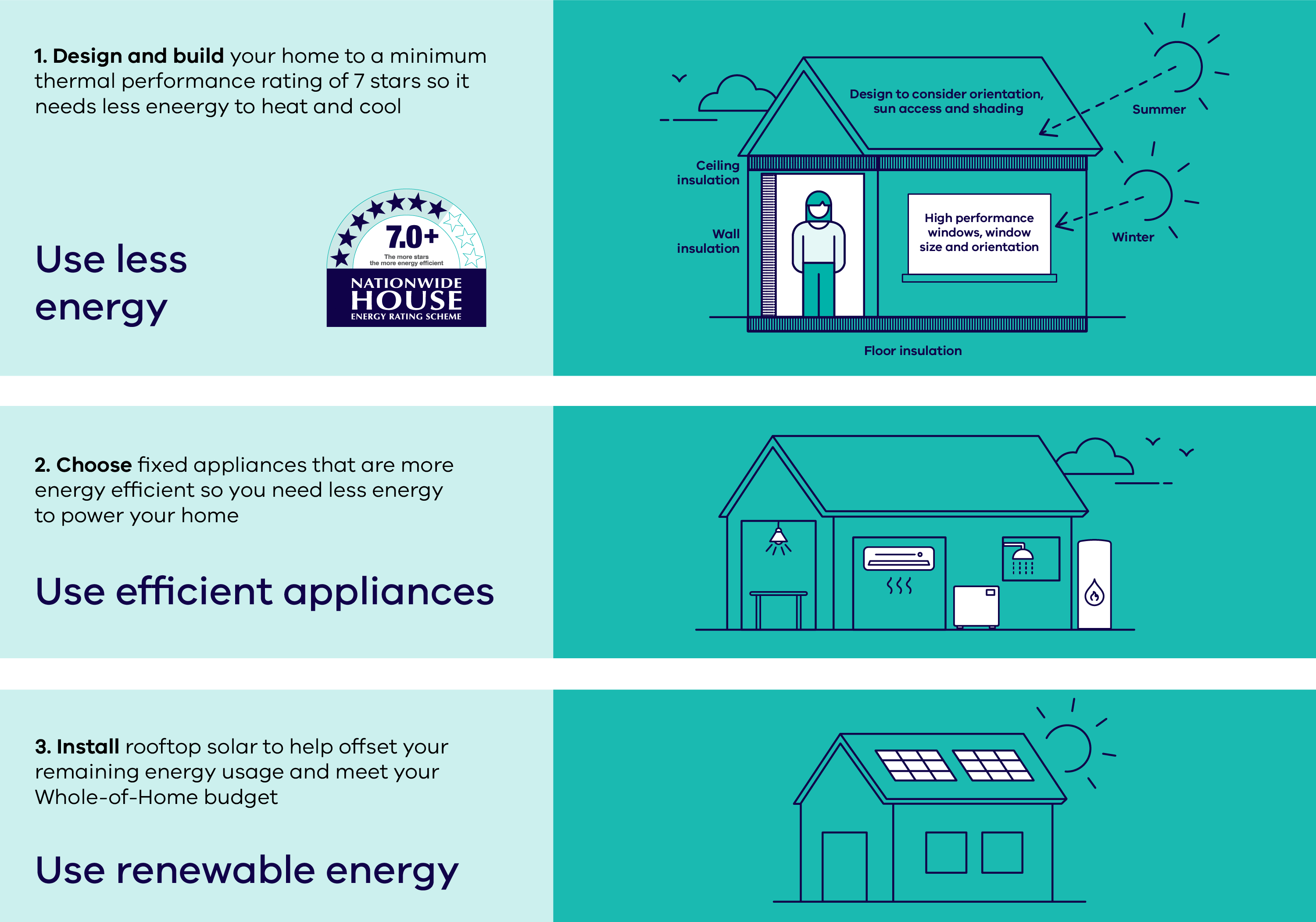
New homes built in Victoria must meet a minimum 7-star energy efficiency rating (NatHERS) and a Whole of Home energy use budget for fixed appliances such as heating and cooling, hot water, lighting, and pool and spa pumps. Rooftop solar can help offset this energy use.
Commercial buildings, including apartments, must also be designed to make it easier to install electric vehicle (EV) charging and solar PV systems, reducing the cost of future upgrades.
Key things to know about 7-star homes
Why we need strong efficiency standards for new homes
Improving energy performance for new homes will:
- save residents money on their energy bills
- make homes safer and more comfortable to live in, particularly during extreme weather events such as heatwaves
- help Victoria achieve its emissions reduction targets and net zero emissions by 2045
- reduce pressure on the electricity grid during peak periods, helping to avoid blackouts and minimise the need for costly network upgrades.
Many older homes were built before modern energy efficiency standards, with homes built before 2005 averaging less than 2 stars. By building new homes to higher standards today, households can reduce energy costs, improve comfort and avoid expensive upgrades in the future.
Victoria supports a national roadmap to improve the energy performance of buildings, with ongoing updates to energy efficiency requirements in the National Construction Code.
With good design, upfront costs of building to 7-star standards can be kept low
If smart design is considered early in the planning process, achieving a 7-star rating can be done without significant additional costs or major changes to materials or construction methods. Key differences between a 6-star and 7-star home may include:
- better design and orientation to the sun, allowing homes to capture warmth in winter and provide shade in summer
- improved ceiling, wall or under-floor insulation suited to Victorian conditions
- higher-performing glazing can reduce heat loss in winter and heat gain in summer. Double glazing is not mandatory. Homes with good orientation may achieve a 7-star rating with some single glazing.
For more information, see the Australian Government's Your Home orientation guide and Your Home glazing guide.
Rooftop solar is not mandatory under 7-star standards
Solar is not required for new homes. However, it can be used to offset energy use from appliances such as heating and cooling, hot water, lighting, and pool and spa pumps to help meet the your energy budget.
Help to make electrification and efficiency changes with rebates and discounts
Additional resources
Page last updated: 09/10/26