
On this page:
Heat in ceiling spaces
Installing ceiling insulation in residential homes requires workers to perform large amounts of work inside ceiling spaces. One of the key hazards when working in ceiling spaces is the potential exposure to heat stress.
Ceilings in residential buildings can experience extreme temperatures due to solar heat gain through the roof, inadequate insulation or ventilation, heat radiated from roofing materials, and the build-up of warm air from occupied spaces below.
These factors can contribute to heat illnesses occurring quickly, either in the form of heat exhaustion or heat stroke.
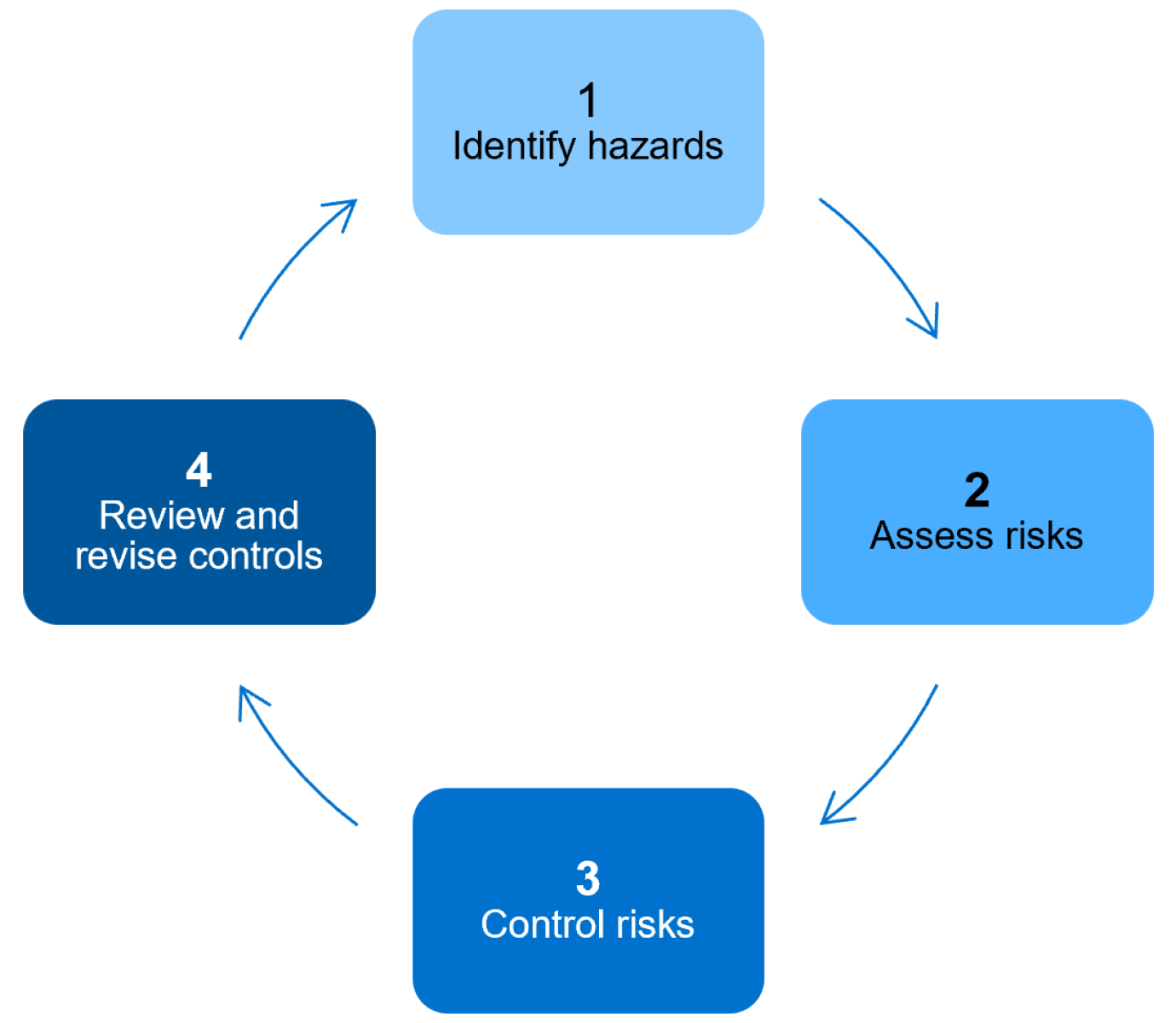
Follow this 4-step risk management process to ensure hazards are identified, risks are assessed and controlled, and that employers fulfil their duty to monitor, review and revise controls when required.
Figure 1: The 4-step risk management process
Step 1: Identify hazards – symptoms of heat illnesses
Workers installing ceiling insulation are exposed to heat-related risks, because they’re required to work inside ceiling spaces. Two of the most serious conditions that can occur if exposed to high levels of heat are heat exhaustion and heat stroke.
Identifying hazards
One of the key hazards of working in ceiling spaces is the potential for extreme heat conditions. Unlike the habitable rooms below, ceiling spaces are often small, cramped and completely uninsulated against the elements. This can cause extremely hot conditions – even on days when weather conditions can be quite mild.
On days where there is strong radiant heat (from direct sunshine) or high ambient temperatures, installers should be aware of the increased risk of heat stress or heat exhaustion.
Heat exhaustion
Heat exhaustion is a serious condition that occurs when core body temperature rises to 38-39°C. This results in poor blood flow to the brain and heart. Symptoms include:
- pale skin
- dizziness
- sweating
- muscle cramps
- rapid heart rate
- nausea and vomiting
- fainting
- headache.
If symptoms of heat exhaustion occur, you should:
- go to a cool area and lie down
- fan yourself, if possible (or find a fan to sit in front of)
- drink cool water if not vomiting
- remove outer clothing
- wet skin with cool water or damp cloths.
If no help is available, the person is not improving or if you think they could have heatstroke, call Triple Zero (000) for an ambulance.
Heat stroke
Heat stroke is a critical condition where core body temperature rises to above 40°C. At this temperature, organ damage occurs and body temperature must be reduced quickly to prevent damage.
Heat stroke presents similarly to heat exhaustion. However, the skin may be dry, and the person may appear confused or agitated. Other symptoms include:
- loss of consciousness
- very high body temperature
- muscle twitching or seizures
- profuse sweating or hot, dry skin
- rapid pulse
- rapid breathing.
Heat stroke is a medical emergency. Call Triple Zero (000) for an ambulance.
While waiting for emergency medical assistance, try to help the person cool down as quickly as possible. This includes:
- moving them to a cool, shady area
- removing excess clothing
- wetting their skin with cool water or a damp sponge or cloth.
- giving the person cool water to drink if they are conscious and able to swallow
- performing CPR, if required.
Step 2: Assess risks – plan your work around the weather
Plan your work around weather conditions and assess the risks based on the identified hazards.
Consider the likelihood, nature and severity of consequences when assessing risks to employees’ health and safety.
The following factors should be considered when assessing the temperature of the ceiling space and estimating the duration of the works.
- The weather temperature at the start of the work and expected changes throughout the day, including peak heat periods.
- The ability to improve ventilation and airflow in the roof through removal of extra roof panels or tiles to allow wind to circulate.
- The time of day the works are scheduled and whether tasks can be undertaken during cooler periods.
- The level and condition of the insulation and its impact on heat retention within the ceiling space.
- The duration and physical intensity of the task to be performed, including frequency and adequacy of rest breaks.
Information about when and how to prepare a safe work method statement (SWMS) for construction activities is available from WorkSafe.
Step 3: Control risks – how to reduce exposure to heat illness
Employers must provide and maintain, so far as is reasonably practicable, a safe working environment for employees. This includes managing risks associated with extreme heat.
Where risks cannot be eliminated, reducing risks can be achieved by working though the successive stages of the hierarchy of control.
There are several methods that can be used to prevent the occurrence of heat illness when installing ceiling insulation, as shown in the following table.
Table 1: Methods for preventing heat illnesses while installing rooftop insulation
| Method | Explanation |
|---|---|
| Rescheduling work |
Where possible, schedule to complete work early in the morning to prevent being inside ceilings during the middle of the day.
On extreme heat days, consider postponing work. |
| Additional ventilation | Remove tile or roof sheet to create airflow through the ceiling cavity when installing insulation. |
| Extra breaks |
Drink cool water regularly when working in a ceiling cavity (even if not thirsty).
Ensure that all workers take regular breaks in a cool area. |
| Extra monitoring |
Always work in pairs. Refer to 2.1 Working in Pairs Regularly check if workers/colleagues are showing signs and symptoms of heat stress. Ensure workers/colleagues are aware of the signs and symptoms of heat stress. |
Information about preventing and protecting workers from heat illness is available from WorkSafe Victoria.
Step 4: Review and revise controls
Managing the risk of heat illness while installing ceiling insulation is an ongoing process. Employers need to monitor, review and where necessary, revise control measures and associated systems of work. This includes reviewing the SWMS whenever there are changes to the work environment, identification hazards, or control measures.
This can include monitoring:
- weather conditions while work has commenced in case the heat becomes extreme
- the temperature in the ceiling space
- employees for signs and symptoms of heat illnesses
- the effectiveness of control measures and whether the SWMS remains current and appropriate for the work being undertaken.
Your actions shouldn't stop at step 4. This process should be repeated regularly to endure risk controls remain effective and continue to protect workers.
Download a copy of this guidance sheet
Continue through the guidance series
Page last updated: 01/10/26