
On this page:
Causes of falls through ceiling cavities
These include environmental and human factors, such as slipping on wet surfaces and tripping on debris left in the ceiling space.
Falls from height remain a major cause of serious injury and death, particularly when work is carried out in ceiling cavities or on internal roof structures.
When managing fall risks in ceiling spaces, key hazards to consider include the following:
- unprotected edges within the ceiling cavity
- fragile surfaces such as plasterboard, fibre cement sheeting, or deteriorated roofing materials or structural components
- openings, vents or service penetrations that may not support a person’s weight
- restricted visibility and limited space that increase the likelihood of losing balance
- environmental factors such as heat, poor ventilation and low lighting
- trip hazards from electrical cables, ducting, pipework and structural members.
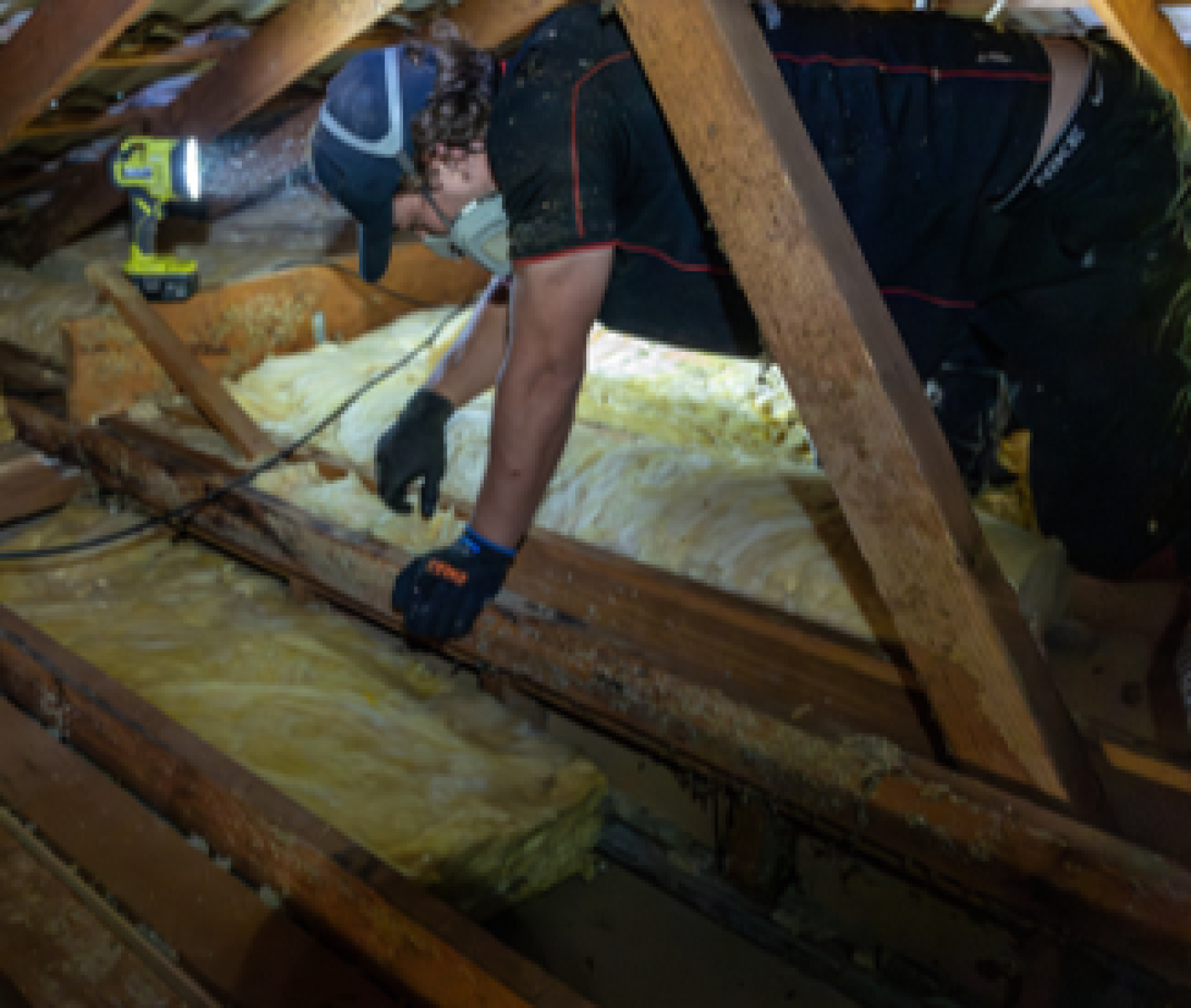
Workers such as electricians and insulation installers are particularly at risk. These workers can easily lose footing and fall through ceilings, fragile surfaces or openings, or while accessing and exiting ceiling cavities.
Even falls from relatively low heights—such as through a ceiling into the room below—can result in permanent, debilitating injuries including fractures, spinal cord damage, concussion or brain injury or death. The likelihood and severity of injury including the risk of fatality, increases with exposure to working at heights and fragile surfaces.
Duties under the legislation
Under the Occupational Health and Safety Act 2004 an employer must:
- so far as is reasonably practicable, provide and maintain a safe working environment, including safe access to and within ceiling cavities
- identify and manage fall through hazards
- ensure appropriate controls, for example, crawl boards, barriers, lighting
- provide information, instruction, training and supervision.
Employees also have an obligation while at work to:
- take reasonable care for their own health and safety
- take reasonable care for health and safety of persons who may be affected by their acts or omissions at a workplace
- co-operate with their employer with response to any action taken by the employer to comply with a requirement imposed by or under the OHS Act 2004 or regulations.
Employees should also report hazards such as missing or inadequate structural supports, damaged ceiling surfaces, or other fall hazards.
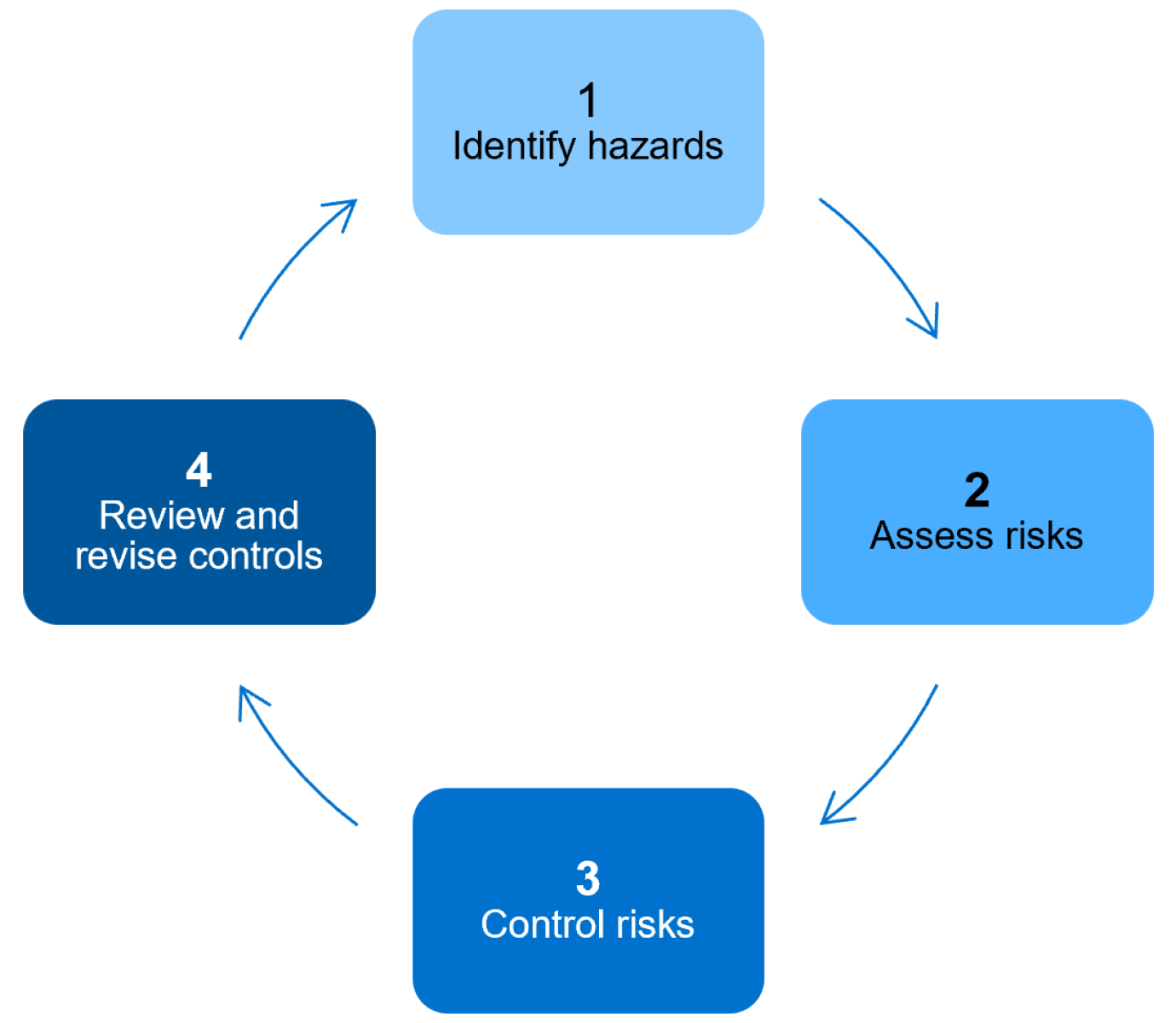
Follow this 4-step risk management process to ensure hazards are identified, risks are assessed and controlled, and that employers fulfil their duty to monitor, review and revise controls when required.
Figure 1: The 4-step risk management process
Step 1: Identify hazards – identify risks of falling through ceiling
As an employer you must, so far as is reasonably practicable, identify all tasks that employees are required to undertake above two metres. This includes work involving ceiling spaces and the risk of falls through roof cavities. Appropriate control measures must be implemented to manage these risks.
A SWMS is a safety planning tool that identifies the hazards and risks and documents the control measures necessary to manage these risks. An employer or self-employed person, you must ensure a safe work method statement (SWMS) is prepared before undertaking any high-risk construction work. Work where there is a risk of fall from height above 2 m is considered HRCW.
Before commencing any work in a ceiling space, a competent employee should inspect the roof cavity to confirm safe access, identify fragile or unsupported areas, and assess any potential fall hazards.
Common hazards
- Ceiling joists not designed to support body weight
- Poor lighting
- Heat stress
- Restricted workspace and awkward postures
- Trip hazards – tools, insulation batts and electrical wiring
- Presence of electrical hazards
- Dust, allergens and poor ventilation
- Fatigue and dehydration
- Unprotected openings / unsafe access and egres
Step 2: Assess risks – determine the risk of falls through the ceiling
The risk of falling through a ceiling is high. Ceiling linings are not designed to support a person's weight, and roof spaces often present limited visibility, restricted movement, elevated temperatures, and multiple trip hazards. A fall through a ceiling can result in serious injury or fatality, including fractures, head injuries, and spinal trauma.
Given the significant likelihood of a misstep or loss of balance within a ceiling cavity, and the severe consequences of a fall, the overall risk rating is assessed as Extreme. As a result, effective control measures must be implemented and verified before any work commences.
Before entering a ceiling space, an inspection should be completed to assess the conditions and identify appropriate controls. Risk controls associated with controlling the risk of a person falling more than two metres must be stated in a SWMS. The SWMS needs to be communicated to employees involved in the task.
The inspection and SWMS should confirm the following:
- Are temporary platforms secure, stable, and suitable for the work being undertaken?
- Is lighting adequate to safely access and move within the roof space?
- Has the roof cavity temperature been measured and assessed?
- Are workers showing any signs of heat stress or fatigue?
- Are appropriate rest breaks being implemented and observed?
- Are workers following safe access and egress procedures?
- Is insulation material stored or managed in a manner that prevents trip hazards?
Work must not proceed until all identified hazards have been assessed and suitable control measures are in place.
A SWMS is required for high-risk construction work and must identify the hazards, risks and control measures associated with that work. While additional hazards and controls may be included in the SWMS, there is no requirement for all workplace risks to be documented within it. An employer needs to communicate the SWMS with the employees who will perform the high-risk construction work.
The SWMS serves as a safety planning tool that clearly outlines the work activities, associated risks, and the control measures to be implemented so that the work can be carried out safely. It should provide employees with clear and practical instructions on how risks will be effectively managed throughout the task.
See the WorkSafe website for more information on when and how to complete a Safe Work Method Statement.
Step 3: Control risks – how to remove the risk of falls through roofs
Employers must, so far as is reasonably practicable, eliminate the risk of employees falling more than 2 metres.
If it is not reasonably practicable for an employer to eliminate the risk of an employee falling more than two metres, the risk must, so far as is reasonably practicable, be reduced using the falls hierarchy of control.
Table 1: Hierarchy of controls for preventing falls through ceiling cavity while installing rooftop insulation
| Control | Explanation |
|---|---|
| Elimination | Complete as much work as possible from outside the roof cavity or redesign the task so workers do not need to enter the ceiling space. |
| Passive fall prevention devices | Install temporary work platforms, crawl boards, covers over ceiling openings, or barriers around manholes and fragile areas to prevent a fall occurring. |
| Work positioning systems | Use a secured work positioning system that allows the worker to maintain a stable position while working near a fall hazard without relying on balance alone. |
| Fall arrest | Use a fall arrest system, such as a harness connected to a suitable anchor point, where higher-level controls are not reasonably practicable. |
| Administrative controls and ladders | Conduct a pre-entry inspection, communicate the SWMS, provide training, ensure adequate lighting, work in pairs, maintain good housekeeping, and use ladders correctly for safe access and egress. |
If any assistance is required in the planning of risk control measures, you should seek assistance from WorkSafe Victoria.
Step 4: Review and revise controls – keep workers safe from falls
An employer must review and, if necessary, revise any measures implemented to control risks associated with falls:
- before any alteration is made to plant or systems of work that is likely to result in a fall
- after any incident, notifiable to WorkSafe, occurs that involves a fall or a risk associated with a fall
- Ii, for any other reason, the risk control measures do not adequately control the risks
- aAfter receiving a request from a health and safety representative.
Your actions shouldn't stop at Step 4. You should repeat this process often to make sure your management of risk is working.
As a ceiling-space insulation installer, it is likely that training should be a minimum requirement for all employees working in ceiling cavities.
It should include topics such as identifying fragile ceiling surfaces, understanding legislative fall prevention requirements, recognising fall hazards, and applying safe work methods to prevent falls through ceilings.
Download a copy of this guidance sheet
Continue through the guidance series
Page last updated: 01/10/26