
On this page:
Risks of working solo
It is not recommended to work alone when installing insulation, as roof spaces are considered hazardous.
Risks involved in installing ceiling insulation can include the following:
- electrical hazard risk
- heat stress and restricted spaces
- falls and structural hazards
- manual handing and fatigue
- emergency responses.
While working in pairs isn’t mandatory in the VEU Ceiling Insulation activity, it is best practice and strongly recommended.
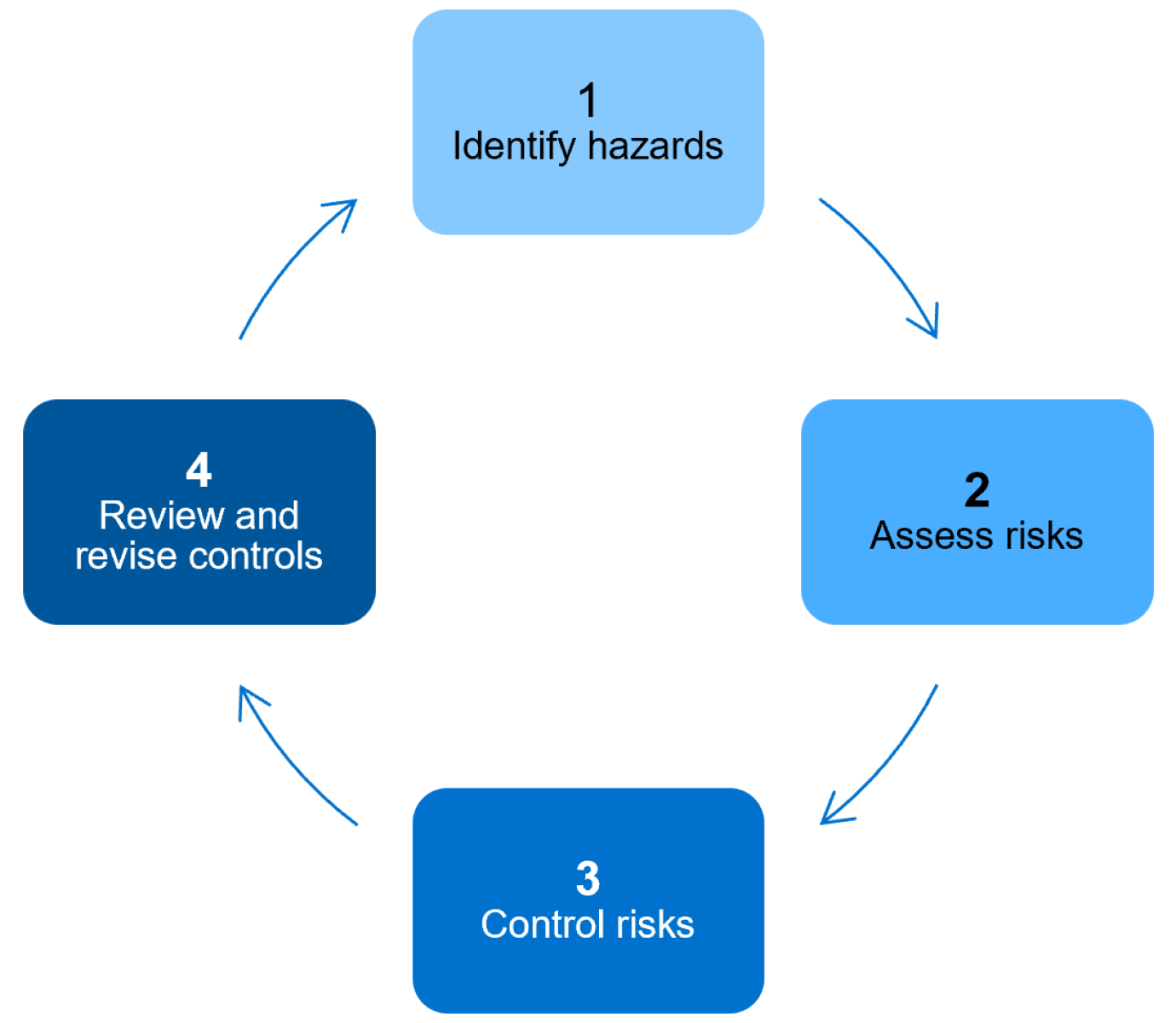
Follow this 4-step risk management process to ensure hazards are identified, risks are assessed and controlled, and that employers fulfil their duty to monitor, review and revise controls when required:
Figure 1: The 4-step risk management process
Step 1: Identify increased hazards when working alone
Step 1 is to identify the increased hazards when working alone, as opposed to in a pair.
Installing insulation in ceiling spaces is considered high-risk work due to several factors. These include:
- working in an area subject to artificial extremes of temperature
- working at heights while accessing or moving through roof cavities
- working near electrical installations such as wiring, junction boxes, and lighting fittings.
These risks are amplified when working alone, because it’s less likely that a colleague or other person can provide immediate help in an emergency.
Table 1 highlights how installing insulation in ceiling spaces is even more high-risk when performed solo compared with working in a pair.
Table 1: How hazards are amplified when working solo
| Hazard | Working alone | Working in pairs |
|---|---|---|
Electrical hazards Ceiling spaces may contain exposed or damaged wiring, increasing the risk of contact to live electrical components. | If an electric shock occurs, the worker may be unable to call for emergency assistance. | If an electric shock occurs, the second person can immediately carry out the emergency response plan and contact emergency services. |
Extremes in temperature and restricted spaces Roof spaces can exceed 50–60°C in warm weather. Prolonged time in these spaces increases the risk of heat exhaustion, heat stroke, and dehydration, compounded by limited ventilation and restricted movement. | If the installer becomes unwell due to heat stress or restricted spaces, they may be unable to react or call for help. | A second person can monitor wellbeing and respond quickly if the installer becomes unwell. |
Falls and structural hazards The risk of falling through ceilings can be high, due to the weakness in plasterboard or damaged joists, trip hazards from beams, services or debris. | If a fall occurs, the worker may be unable to call for emergency assistance. | If a fall occurs, the second person can immediately carry out the emergency response plan and contact emergency services. |
Manual handling and fatigue Lifting and positioning bundles of insulation can be tiring and if not in the correct position can increase strain and injury as this becomes a repetitive movement in tight spaces. | If a worker begins to suffer from fatigue or an injury occurs, they may not be able to call for emergency assistance if necessary. | If a worker begins to suffer from fatigue, the second person may notice and suggest a break. If a fall occurs, the second person can immediately carry out the emergency response plan if required. |
Quality and compliance Peer checking helps ensure correct insulation coverage and proper clearances around services in the roof space, while also supporting compliance with relevant standards and program requirements | A worker working alone may not see a potential mistake in terms of the insulation installation – such as missing a spot (and reducing the R-value) or missing a safety hazard. | Working in a pair allows for mistakes to be easily identified immediately, preventing poor quality installations or missing a safety hazard. |
Emergency responses If you are injured, overcome by heat, trapped, or electrocuted while working alone, there is no immediate assistance, and timely response is critical in roof space incidents. | If an emergency occurs, the worker may be unable to call for assistance. | If an emergency occurs, the second person can immediately contact emergency services and provide timely assistance. |
Step 2: Assess the heightened risk of working alone
Step 2 is to assess the heightened risk of working alone.
Working in roof cavities can be classified as high risk construction work due to the risk of a fall from height of greater than 2 metres, the presence of energised electrical services or the artificial extremes in temperature. Working in pairs should be adopted as best practice for installers and electricians entering roof cavities to install insulation in ceiling spaces.
Working as a pair enhances safety, supports effective hazard identification, and improves quality, efficiency, accountability, and management of both mental and physical workload.
Working in a pair can also form a central component of a Safe Work Method Statement (SWMS), which is mandatory for high-risk construction work.
Where work is undertaken alone, ensure a system of work is in place to identify, assess, and control risks associated with solo work. WorkSafe provides guidance on working alone.
Step 3: Control risks while working in pairs
When installing insulation in ceiling spaces, working in pairs requires clear communication and coordinated actions to maintain safety. Before entering the ceiling space, all workers need to understand the task sequence and their individual roles and responsibilities. They need to know the hazards and risks associated with restricted spaces, elevated work areas (fall risk), and low visibility environments.
When handling insulation materials or tools, workers should coordinate their movements to avoid sudden shifts that may cause strain, slips, or loss of balance. This includes:
- using correct manual handling techniques
- passing materials safely
- maintaining awareness of electrical wiring, fragile ceiling linings, uneven joists, and other potential hazards.
- maintaining communication and awareness of each worker’s location to enable the prompt rescue and recovery of a person in the event of a fall or other emergency.
Verbal signals should be used consistently when starting, stopping, or changing actions to ensure both workers remain synchronised.
Due to the physical demands and environmental conditions of ceiling spaces, for example heat, limited space, potential dust or allergens, workers should monitor each other for signs of fatigue, heat stress, disorientation, or unsafe behaviour. If any concern is identified, both workers should exit the ceiling space immediately or when safe to do so, and the task risk should be reassessed before continuing.
Step 4: Review and revise – when to work in pairs
Risk controls should be reviewed regularly to ensure they remain effective and continue to provide a safe system of work when installing insulation in ceiling spaces. This includes reviewing whether working in pairs remains an appropriate control measure and whether additional controls are required.
Employers should review and revise their controls when:
- there is a change to the work, work environment, equipment, or materials being used
- after an incident, injury or near miss,
- an indication that existing controls are not working effectively
- after a request from a health and safety representative (HSR).
Your actions shouldn't stop at step 4. This process should be repeated regularly to endure risk controls remain effective and continue to protect workers.
Download a copy of this guidance sheet
Continue through the guidance series
Page last updated: 01/10/26