
On this page:
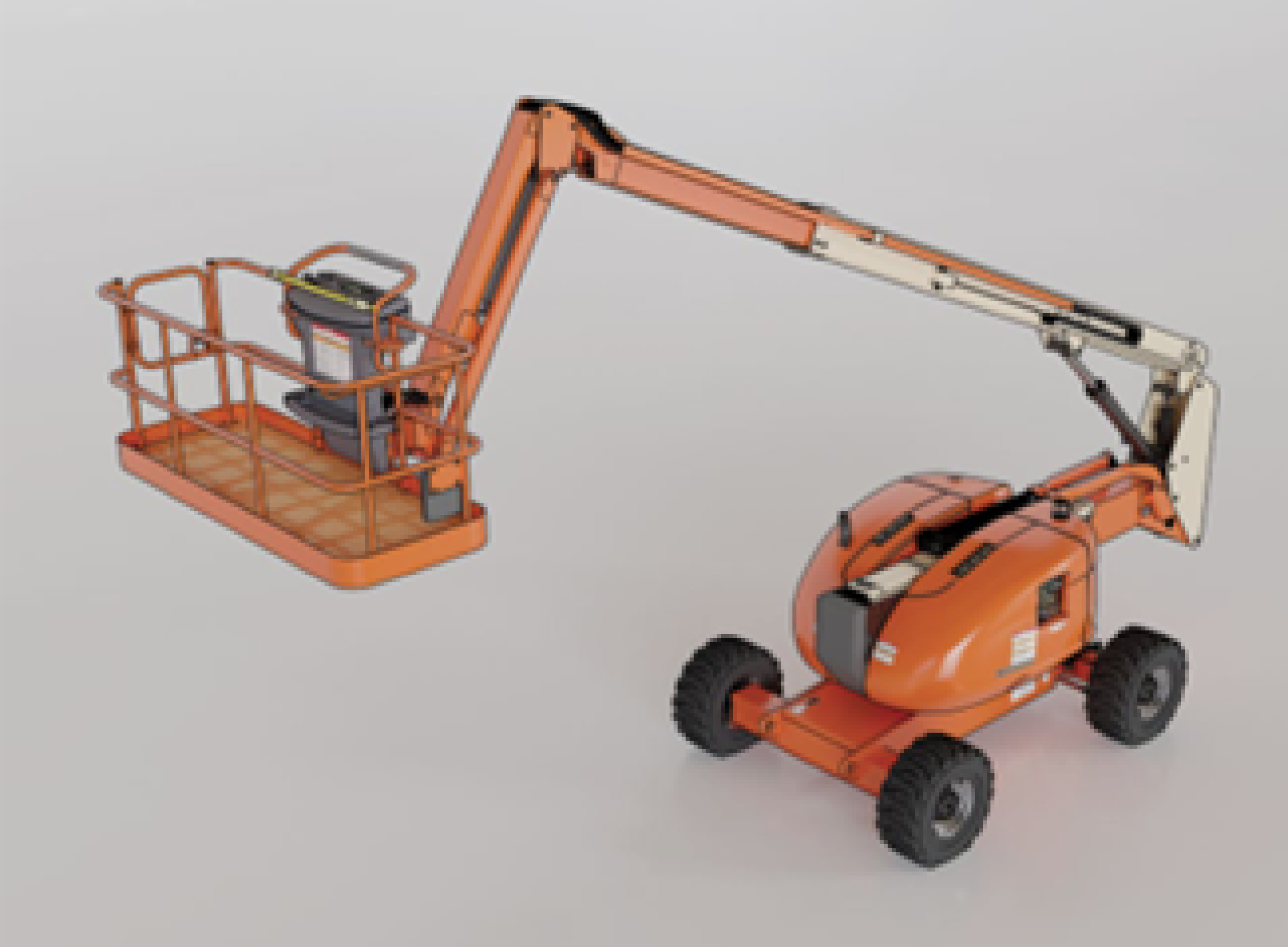
Elevated work platforms
There are numerous hazards associated with EWP use that can pose a risk to the health and safety of employees and the public. Use of EWPs during installations of rooftop insulation requires effective hazard identification taking into account the unique features of each EWP type.
Rolls of insulation are large and unwieldy and must be handled with care to protect employees undertaking the installations.
For rooftop insulation installations in residential premises, EWPs may be a suitable way of conveying rolls of insulation onto the roof, thus reducing the risks associated with manual handling tasks and reducing exposure to fall risks.
Note: Ladders should not be used to carry materials that prevent the worker from maintaining 3 points of contact. Insulation rolls must be lifted using a mechanical aid or other safe method.
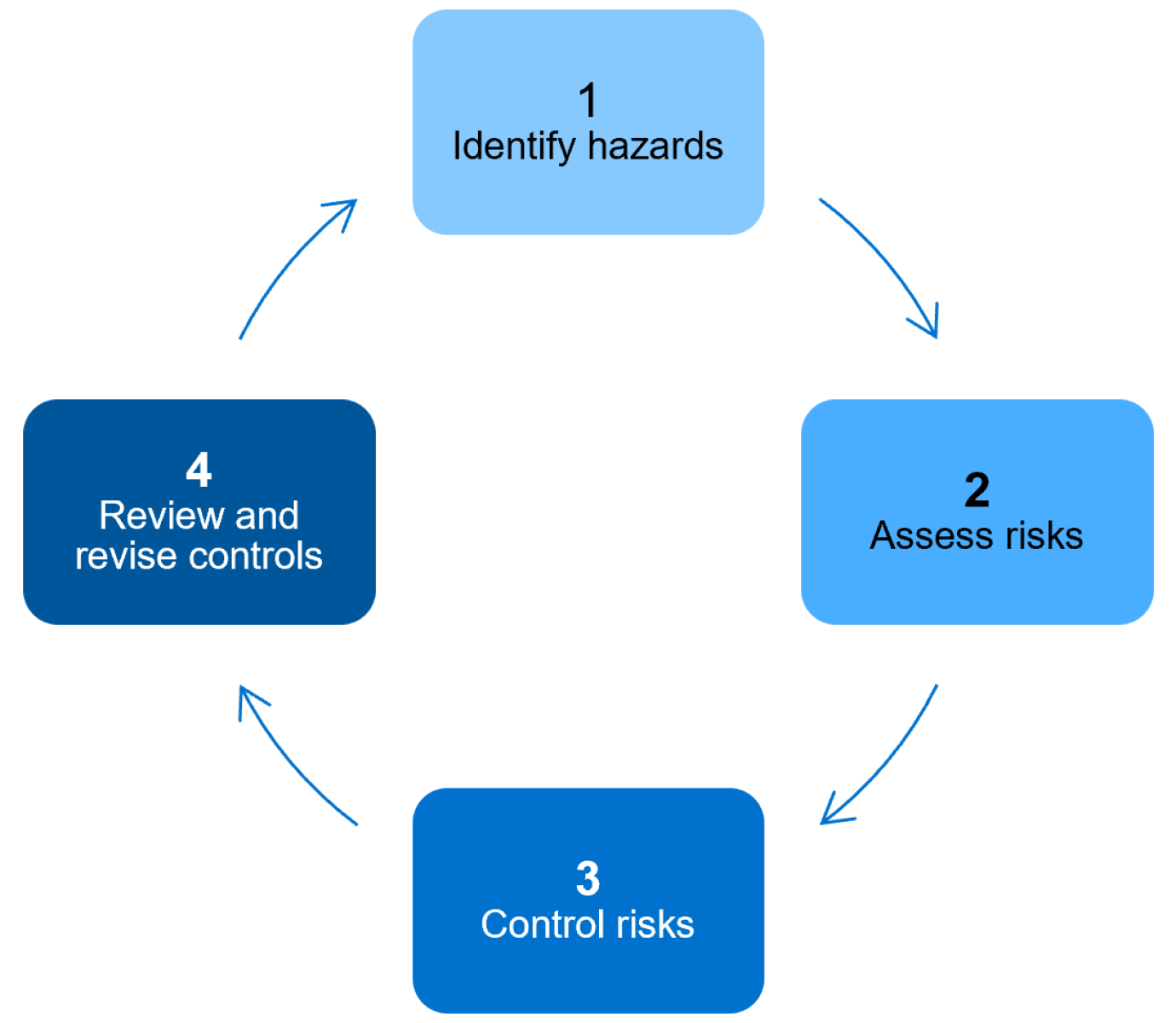
Follow this 4-step risk management process to ensure hazards are identified, risks are assessed and controlled, and that employers fulfil their duty to monitor, review and revise controls when required:
Figure 1: The 4-step risk management process
Step 1: Identify hazards – common EWP hazards
There are numerous hazards associated with EWP use that can pose a risk to the health and safety of employees and the public.
Use of EWPs during installations of rooftop insulation on residential premises requires effective hazard identification taking into account the unique features of each EWP type.
Common hazards related to the use of EWPs during rooftop insulation installations can include:
- uneven or unstable ground
- concealed voids, basements or pits
- working at heights
- crushing injuries
- overhead conductors, structures and vegetation
- traffic and pedestrians
- wind loading
- mechanical failure of the machine
- transport, unloading and manoeuvring.
Employers must so far as reasonably practicable consult with their employees (including any HSRs and independent contractors) when identifying or assessing hazards or risks to health and safety.
Note: For more information and practical guidance for duty holders about complying with their duties under the Occupational Health and Safety (OHS) Act 2004 see Elevating work platforms industry standard on the WorkSafe website.
Step 2: Assess risks – plan your use of EWPs
Plan your use of EWPs and assess the risks based on identified hazards.
- Take into account the likelihood, nature and severity of consequences and document your systems of work in a safe work method statement (SWMS) when required.
- Employers and self-employed persons must provide their workers with a SWMS before undertaking high-risk construction work (HRCW). HRCW includes work where there is a risk of a person falling more than 2 metres.
- Employees undertaking HRCW must be informed and consulted in determining risk controls during the SWMS preparation process.
- Ensure the SWMS is prepared before the work commences and ensure that the work is performed in accordance with the SWMS.
Additional factors to take into consideration may include:
- no go zones
- side force limitations
- wind speed and prevailing weather conditions
- weight of operators, tools and materials in relation to the rated capacity of the EWP
- plant to be operated in accordance with manufacturers recommendations.
If it is planned to enter or leave the platform of an EWP when it is in an elevated position, for example gaining access to the roof of a building, a safer alternative method needs to be considered. For more information, refer to AS 2550.10.
See the WorkSafe website for more information on when and how to complete a Safe Work Method Statement.
Step 3: Control risks – safe use of elevating work platforms
Employers must eliminate any risk associated with the use of an EWP, so far as is reasonably practicable. Where this cannot be achieved the hierarchy of control must be used to reduce risks, so far as is reasonably practicable.
Ensure the selection of the EWP is the right type for the specific task and determine if any attachments are required to complete the task. Some work practices to be avoided while using EWPs are:
- travelling with a raised platform
- exceeding the safe working load (SWL) of the EWP platform
- using indoor rated EWPs outdoors
- working over footpaths, work areas or publicly accessible areas without adequate controls
- working above or beneath other EWPs
- allowing excessive material, debris and equipment on the platform
- placing outrigger footplates on a slope.
Where there is a risk of crushing against a fixed structure, an effective operator protective device needs to be fitted, so far as is reasonably practicable. These devices are commonly known as secondary guarding and may include, but are not limited to:
- physical barriers attached to the platform, which reduce the likelihood of employees being crushed against structures
- pressure sensing devices positioned over the control panel, which detect pending crush incidents and prevent further hazardous movements
- proximity sensing devices which prevent an EWP’s platform from manoeuvring into high-risk areas near fixed structures.
Remember that consulting with employees and independent contractors improves occupational health and safety (OHS) outcomes. Their direct participation helps identify hazards and risks, and supports the evaluation and adoption of risk control measures.
Direct participation also gives a sense of ownership that translates to improved uptake of control measures when implemented.
Operating EWPs near overhead assets
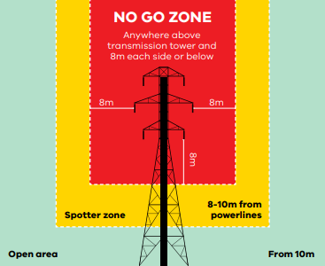
The use of EWPs around overhead electrical assets introduces risks that require knowledge of, and compliance with the No Go Zone (NGZ) requirements.
It is critical that EWP operators understand and comply with the NGZ requirements around overhead distribution and transmission assets and understand the various requirements associated with each level of obligation.
In conjunction with NGZ requirements, the role of electrical spotters, when they are required, and their licensing requirements should be understood. Spotters must:
- be registered with Energy Safe Victoria
- hold current first aid and cardiopulmonary resuscitation (CPR) qualifications
- only spot for plant that they themselves hold competency for, noting that a person with a Dogman or Rigger class spotters registration card may act as a spotter for any type of plant
- only observe operation of one item of plant at any one time
- not undertake any other task while observing plant operating in the Spotter Zone
- understand and make allowance for sag and sway of overhead conductors.
There are inherent dangers of overhead conductor contact associated with tracking plant around a site. Maintain awareness at all times to avoid plant strike and understand your obligations to seek permitting with the relevant Distribution Network Service Provider (DNSP) if plant or equipment could encroach into the NGZ.
Further information
- No Go Zones see the Energy Safe Victoria website
- Electrical spotters see the Energy Safe website
- Working with powered mobile plant near overhead assets see the WorkSafe website
Figure 2: No go zone around distribution poles
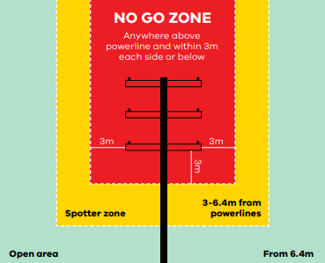
Figure 3: NGZ around transmission towers
Step 4: Review and revise controls
Managing the risk of working with EWPs is an ongoing process. Under regulation 121 of the Occupational Health and Safety Regulations 2017 (OHS Regulations) employers have a duty to monitor, review and, if necessary, revise control measures or any associated systems of work:
- before the plant is deployed at a workplace
- prior to making any alteration to the plant or its associated systems of work, including a change in location
- if new or additional information about hazards or risks relating to the plant or its associated systems of work become available
- after any notifiable incident
- if, for any reason, the risk control measures do not adequately control the risks
- at the request of a Health and Safety Representative (HSR).
Your actions shouldn't stop at step 4. This process should be repeated regularly to endure risk controls remain effective and continue to protect workers.
Continue through the guidance series
Page last updated: 01/10/26