
On this page:
Potential for injuries
Employees who manually handle insulation, tools and other materials required as part of a rooftop retrofit insulation installation can be injured by:
- strain from manual handling
- overbalancing, tripping and falling from a roof or ladder
- being struck by falling objects while manual handling.
A key injury resulting from manual handling is musculoskeletal disorders (MSDs) which include:
- sprains and strains
- back injuries
- hernias
- chronic pain
- cuts and broken bones.
Employers are required to control the risks of MSDs associated with hazardous manual handling, so far as is reasonably practicable.
A risk assessment should be carried out prior to handling heavy and bulky items. This should identify any manual handling tasks related to the installation of rooftop insulation that may pose a hazard.
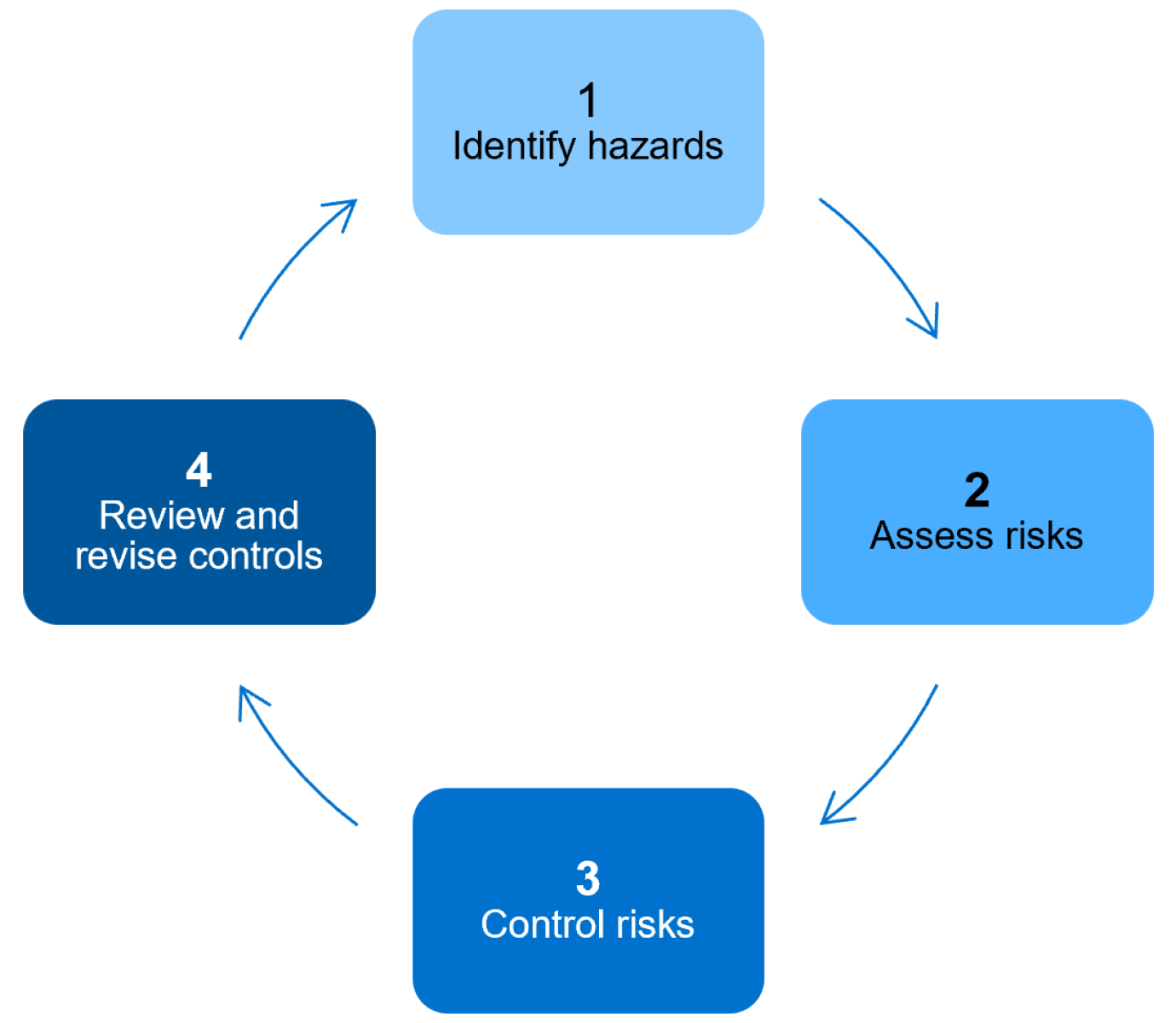
Follow this 4-step risk management process to ensure hazards are identified, risks are assessed and controlled, and that employers fulfil their duty to monitor, review and revise controls when required:
Figure 1: The 4-step risk management process
Step 1: Identify hazards – what manual handling work can be hazardous
Not all manual handling work is hazardous. Employers have a duty to identify, so far as is reasonably practicable, and in consultation with employees, any work that involves hazardous manual handling. Hazard identification is the first step in assessing workplace tasks to determine if they pose an MSD risk to employees.
During the installation of rooftop insulation employees may perform hazardous manual handling tasks that can lead to MSDs. These include:
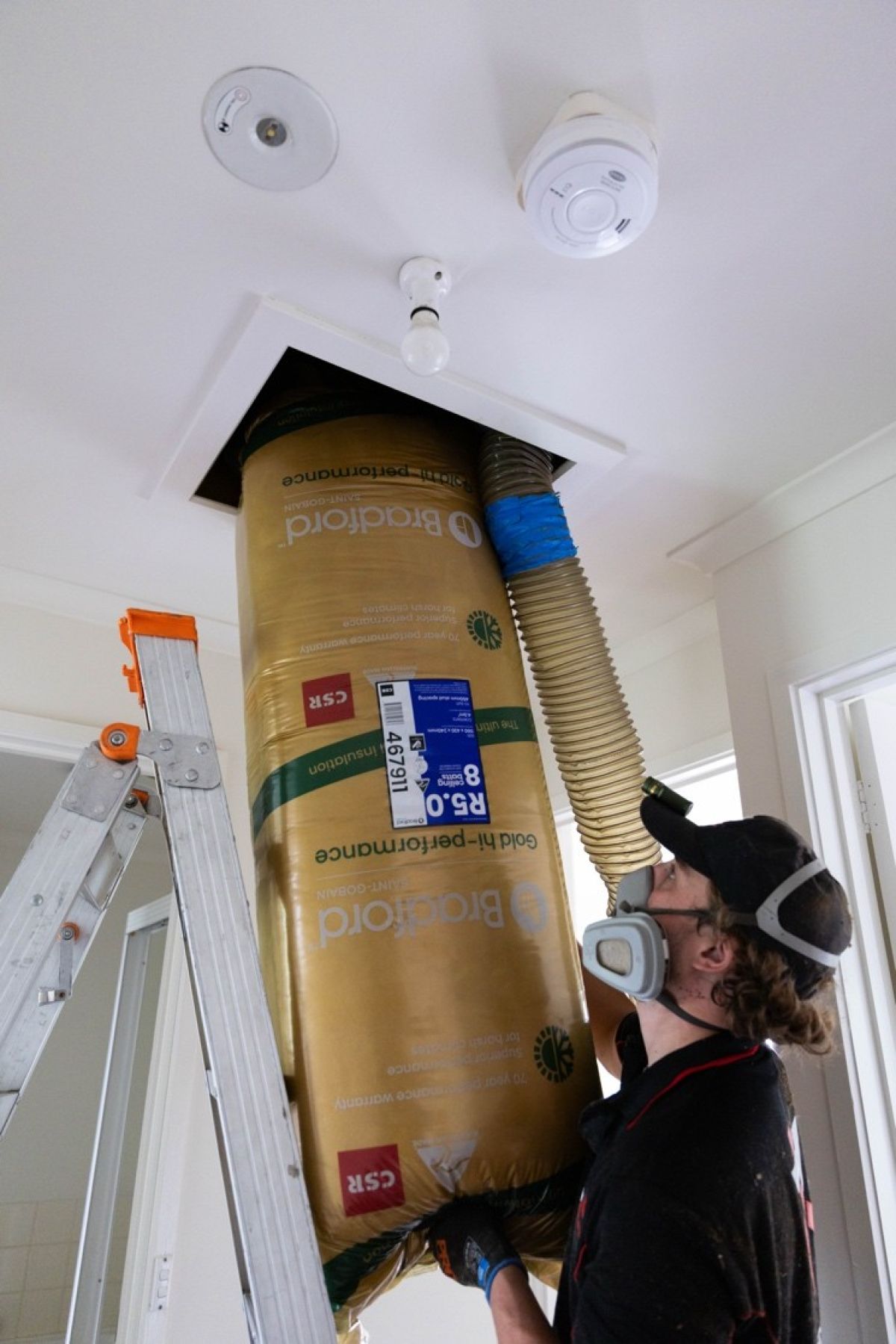
- lifting insulation bundles or other heavy items above shoulder height which may present risk factors for strains, sprains and back injuries
- working overhead to install and secure insulation to ceiling cavities and roof structures, which involve awkward postures, repetitive or sustained forces and exposure to vibration from using power tools (e.g. staple guns or drills)
- manual handling of heavy or bulky insulation materials onto a roof or into ceiling spaces during the installation process, which may lead to insulation slips, trips and falls.
Step 2: Assess risks – when does manual handling become more hazardous?
Once the hazards have been identified, and in consultation with employees, assess the MSD risk posed to employees undertaking manual handling tasks.
Forces, postures, movements, and vibration can interact to increase the risk of injury. For example, it takes more bending and twisting of the back to pick up insulation bundles from the floor than from a bench at mid-thigh height. The more sustained the task, the greater the risk of injury. Environmental factors like heat, cold and lighting levels can also increase the risk of injury.
Work-related stress can also be a factor in the development of MSDs. For example, high pressure and a perceived lack of support can contribute to poor outcomes in managing and treating MSDs.
All of these factors can be exacerbated by an employee's physical condition and attributes, age, and the existence of any prior injuries.
See the WorkSafe website for more information on when and how to complete a SWMS for construction activities: Safe Work Method Statements (SWMS).
Step 3: Control risks – how can you control the risk of MSD?
To control the risk of MSD, set out specified risk control measures and commit to using them when undertaking hazardous manual handling.
The hierarchy of control is the best risk management tool for controlling risks in the workplace. Chapter 3, Part 3.1, of the Occupational Health and Safety Regulations 2017 (OHS Regulations) stipulates an employer's duties with respect to hazardous manual handling and includes the specific hierarchy for controlling MSD risk.
Employers must apply the highest level of control so far as is reasonably practicable before applying lower order controls to reduce remaining risk. In some cases, it will be necessary to use a combination of risk control measures to effectively control risk
For more information see the WorkSafe Hazardous manual handling compliance code.
Table 1: Hierarchy of control for controlling the risk of MSD associated with hazardous manual handling
| Level | Description | Example |
|---|---|---|
| 1 | Eliminate risk of MSD | Remove any activity that carries the risk of MSD |
| 2 | Reduce the risk of MSD by introducing changes to the workplace or work | Create changes to: workplace layout, environment, or systems of work devices used in hazardous manual handling Also consider mechanical aids |
| 3 | Reduce the risk of MSD through providing information, instruction and training | Ensure appropriate provision, use and understanding of information, training and instruction |
Step 4: Review and revise controls
Control measures are more effective where there is regular review of work procedures to make sure they are working as planned. An employer must review and, if needed, revise them:
- before changes are made to a thing, process or system of work that involves manual handling
- when new information about hazardous manual handling becomes available including new and improved control methodology or equipment
- if an injury is reported or a notifiable incident occurs
- if for any reason, the risk control measures fail to adequately control the risk
- if a Health and Safety Representative requests a review and/or revision of a control.
Your actions shouldn't stop at Step 4. You should repeat this process often to make sure your management of risk is working.
Continue through the guidance series
Page last updated: 01/10/26