
When an energy emergency hits Victoria, the effects can be immediate and far-reaching.
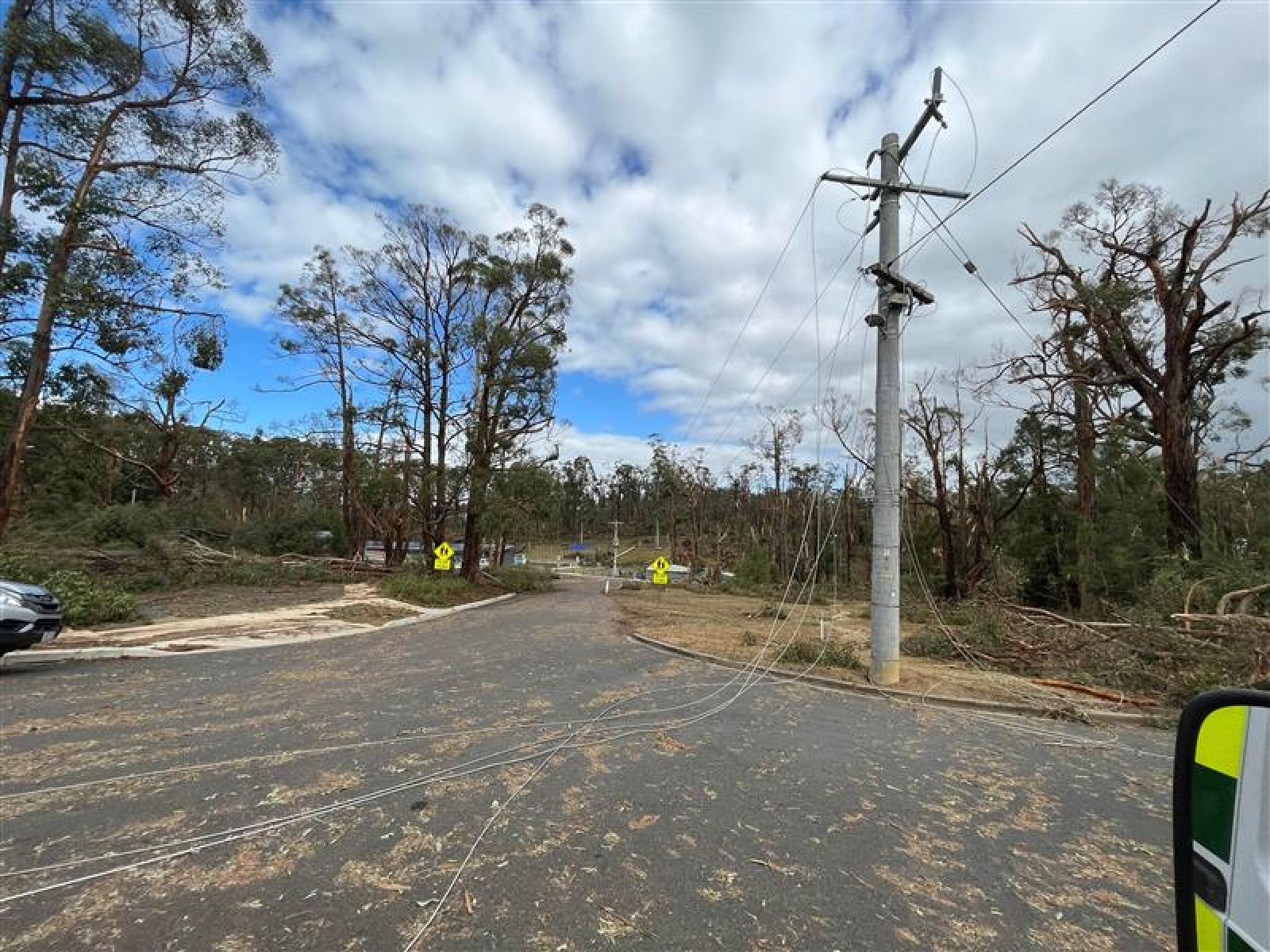
Power outages can be disruptive to our daily lives – a severe storm might bring down powerlines, the lights might go out, our phones may stop charging, our homes fall quiet with no internet and television to entertain us.
But the true consequences of an energy emergency extend well beyond these minor inconveniences.
Hospitals switch to back-up generators, telecommunications falter, fuel supply and transport networks are disrupted and businesses close. Energy emergencies impact whole communities, particularly those at risk, and within the first 48 hours, the statewide economic impact can reach hundreds of millions of dollars.
In these moments, leadership matters
Behind the outage maps and restoration updates, a coordinated state response is activated, led by the Victorian Government’s Class 2 Controllers (C2C).
A C2C holds the authority to direct and manage responses to major disruptions across electricity, gas, and liquid fuels. They coordinate intelligence, oversee consequence management, issue public warnings and align government agencies to stabilise essential services.
The role demands decisiveness under pressure, the ability to interpret changing information and the judgement to balance safety, economic stability and community confidence. Our C2Cs provide critical advice to the Minister for Energy, Department of Energy, Environment and Climate Action’s (DEECA’s) Secretary, the Emergency Management Commissioner, and state coordination teams.
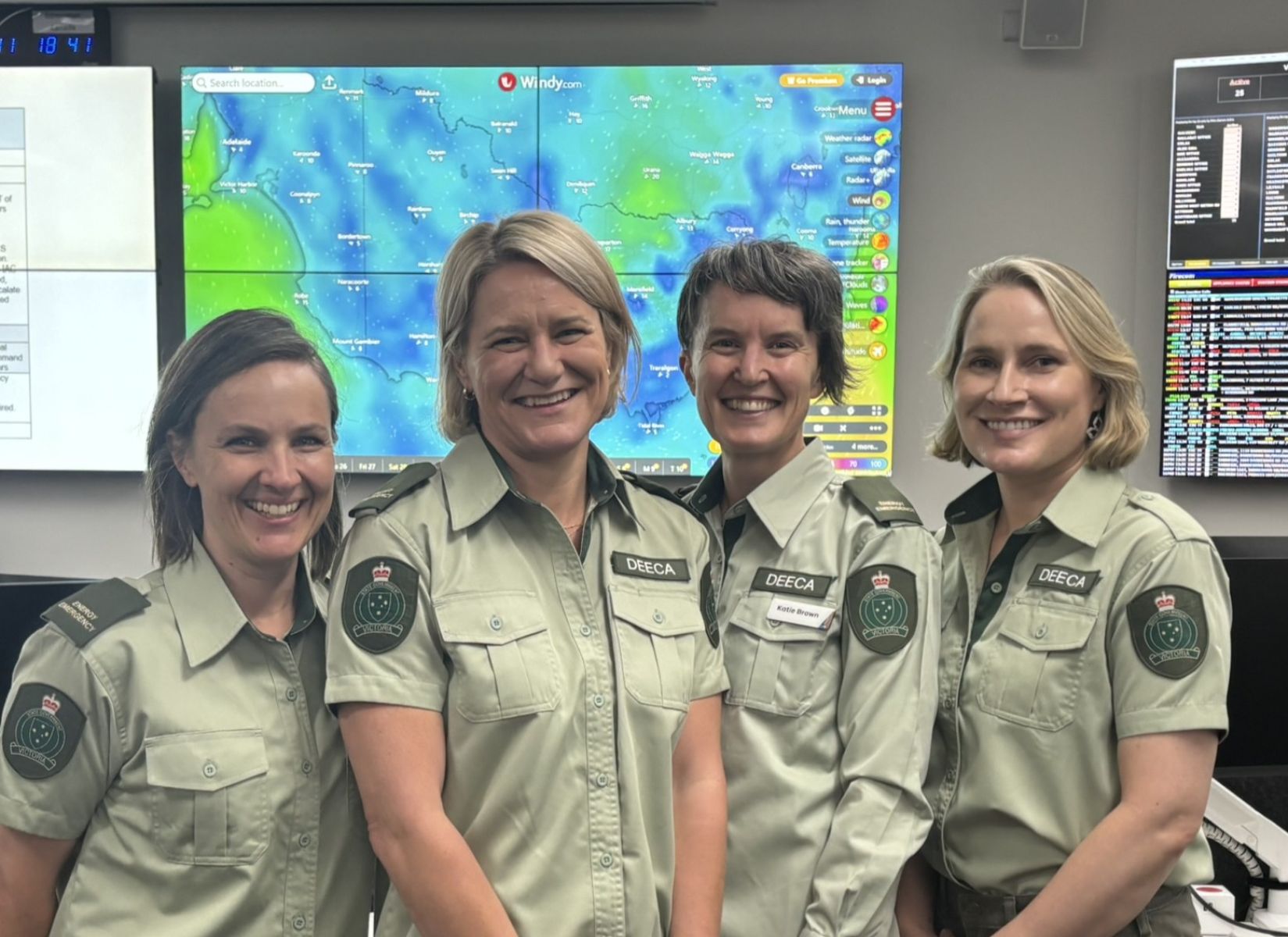
This International Women’s Day, we recognise four women who step into this leadership role when Victoria needs it most.
Energy is essential, and so is leadership
Katie Brown, DEECA’s Executive Director of Electrification, Efficiency and Safety, joined the Victorian Government in 2019 and was endorsed as a C2C in November 2023.
For Katie, the responsibility is clear, and she approaches leadership with a measured, community-focused approach. She emphasises that effective leadership, even in an emergency, is not reactive; it is deliberate, steady and grounded in service to others.
'Energy is an essential service. Our lives are shaped by the high-quality service that our energy providers give, so when it’s not available, our community needs support.'
'The safety of our community and responders is my first priority. But beyond safety, energy outages have cascading impacts. Customers at risk need additional protections. Businesses rely on supply continuity. The broader economy depends on reliable electricity, gas and fuel supplies. I keep all of this in mind when responding to an energy emergency.'
Kim Le Cerf, DEECA’s Director of Energy Programs, joined the Victorian Government in 2022 and became a C2C in 2025. Having supported energy emergency responses across a range of roles, she brings a deep understanding of what it takes to manage and lead during these critical events.
'There is so much coordination and problem-solving behind the scenes before, during and after an energy emergency. It’s never as simple as flipping a switch or sending out a crew. Teams across government, emergency management and energy businesses work around the clock analysing risks, sharing information and planning ahead to keep communities safe.'
'This shapes how I lead. It reminds me to stay calm, work closely with emergency management colleagues and energy network partners, and make decisions that genuinely support communities. Serving as C2C is both a privilege and a big responsibility. It keeps me focused on supporting Victorians and reinforces why this work matters.'
When the lights go out, consequences can escalate
Lisa Opray, Director of Organisational Performance at VicGrid , has worked in the Victorian Government for 15 years and has served as a C2C for six, with her first activation in 2021. She has seen first-hand how quickly disruption escalates.
'For a significant electricity outage, this causes widespread disruption and significant risk and economic loss to the community and businesses,' she explains.
Lisa is well aware of the lengthy list of consequences brought on by an energy emergency. 'Collaborating across emergency services, industry and local government to quickly resolve the consequential impacts of energy emergencies on other essential services like telecommunications, water, health, and the grocery sector makes a world of difference to our communities.'
The February 2024 storm event was a particularly memorable moment for both Lisa and Katie. More than 530,000 customers lost power at its peak, and the economic impact to Victoria was estimated at $770 million, with most losses occurring within the first 24 hours.
In that environment, the C2C role is more than just operational, it’s strategic. 'We are not only managing the energy emergency response,' Lisa says, 'we are managing the flow-on implications to other essential services, and the political and stakeholder implications of these events. Energy networks operate nationally and, for liquid fuels, internationally. An energy emergency in Victoria can have implications well beyond state borders.'
Remaining calm through the storm
Lyn Bowring, DEECA’s Executive Director, Consumer, Community and First Peoples' Energy Transition, joined DEECA in 2019 and has served as a C2C since 2020.
For Lyn, the weight of the role is grounded in people, not infrastructure.
'I am very conscious that what’s at stake is far more than infrastructure. It’s people’s safety, health, livelihoods, and confidence that everything possible is being done to support them. Increasingly frequent extreme weather events impact on communities’ resilience.'
Lyn has been the C2C across a range of significant energy emergency situations as well as other emergency events, including wildlife and biosecurity events and floods. Dealing with a wide range of events is both challenging and interesting for Lyn. 'It is always super interesting and a big responsibility to make good decisions with sometimes imperfect information.'
Victoria’s energy networks are privately owned, which adds another layer of complexity. 'In Victoria, the government does not own the energy networks,' she explains. 'Behind every restoration update is a complex set of decisions, intelligence gathering, safety assessments, prioritisation of critical assets and customers at risk, and multi-agency coordination.'
At the centre of that complexity is clarity of purpose in her C2C role.
'The most important thing at all times is that we keep people safe. I am extremely driven to make a meaningful difference. In emergency management, your impact is immediate, tangible, and directly focused on supporting communities experiencing difficult circumstances.'
Back yourself
On International Women’s Day, their advice to other women considering careers in emergency management, the energy sector or operational leadership is consistent.
'Back yourself,” Kim says. 'Step toward the opportunities that stretch you. These roles are challenging, purposeful and incredibly rewarding, especially if you’re motivated by supporting communities and making a real difference.'
'Be brave,' says Katie. 'Every time I put on my uniform, I still get butterflies. It’s a great opportunity to work with incredible people, learn a lot and give back to the Victorian community.'
'Back yourself and give it a go,' Lyn adds. 'You don’t need to be an expert from day one. You’ll be surprised how transferable your skills are, and how much value you already bring.'
'Trust that you have value to contribute,' Lisa says. 'Your diversity, adaptive problem solving and compassion will strengthen our sector and our emergency response.'
When the storms roll across the state, the lights go out and communities are the most at risk, these leaders are there, ensuring energy is restored safely and efficiently, with the community at the centre of every decision.
Page last updated: 10/03/26